Month: December 2005

  • ~Our Year in Review 2005~


    Ringing the Church Bell in Ellwood City, Orthodox Monastery of the Transfiguration.


    Coloring at the Monastery in Saxonburg ~ The Sisters have created these wonderful coloring books.


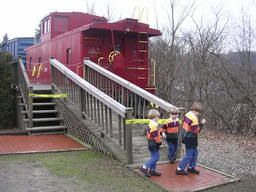
    Visiting the Amish town of Volant~ the boys liked these train cars that now house quaint little shops.

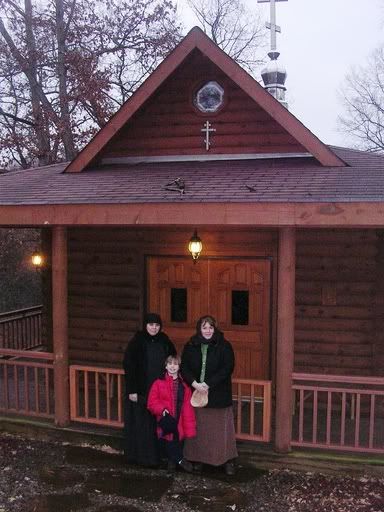
    St. Seraphim’s Chapel at the Nativity of the Theotokos Monastery in Saxonburg, PA.


    The boys walking to St. Seraphim’s chapel and enjoying the Monastery grounds.


    Sister ( my childhood friend), Basil and me.

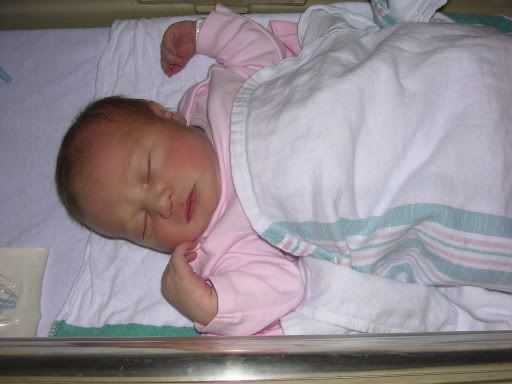
    Sleeping peacefully after some very eventful days. 


     We visited the Orthodox Monastery of the Transfiguration in Ellwood City, Pennsylvannia. The monastery was started by Mother Alexandra~ Princess Ileana of Romania.

    Mother Abbess Alexandra
    Ileana, Princess of Romania
    1909-1991


    Princess Ileana was the daughter of King Ferdinand and Queen Marie of Romania. After marriage and raising six children, she became a novice at the Monastery of the Veil in Bussy, France in 1961. She professed monastic vows there in 1967 and later that year founded The Orthodox Monastery of the Transfiguration in Ellwood City, Pennsylvania—the first English speaking Orthodox monastery for women in the United States. She fell asleep in the Lord on January 21, 1991 and is buried at the monastery she founded.


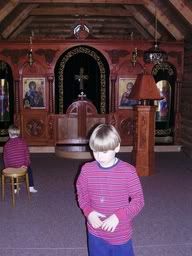
    Below is a photo I took of the Icon of Christ on the ceiling of the Orthodox Church of the Transfiguration in Ellwood City. I have a very good friend that just became a nun at the monastery.


    St. Seraphim’s Chapel~ Monastery of the Nativity of The Theotokos

    Vasilopita


    Cutting the Vasilopita
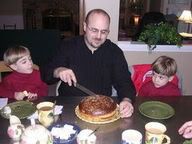


    One of the most beautiful and inspiring traditions and customs of the Orthodox Church is the observance of the Vasilopita. It is this annual observance, together with many other traditions that brings together our families and increases our awareness of the needs of the poor.

    The world Vasilopita is a compound Greek word which means the sweet bread of St. Basil the Great, the one that is cut New Year’s eve or New Year’s day. Usually it is cut by the senior member of the family.

    Portions of the Agiovasilopita or Vasilopita are distributed as follows: The first portion is cut in remembrance of our Lord and Savior, Jesus Christ. The second is for the Holy Mother of our Lord, Virgin Mary. The third is for St. Basil the Great, the other portions are cut for the members of the family including the Church, house, for the traveler, the visitor and the poor.

    In one of those portions is a coin and whoever receives that coin, is believed to have a special blessing for the New Year. The traditional Vasilopita with the gathering of the family members and with the holiday atmosphere is one of the most beautiful traditions of our families.


    Blessing of the Waters
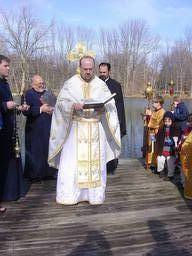


    The Troparion For the Feast of Theophany: When you were baptized in the Jordan, O Lord, the worship of the Trinity was revealed to the world. For the voice of the Father witnessed to you by calling you his beloved Son, and the Spirit, in the form of a dove, confirmed the truth of his words. O Christ, our God, you have appeared to us and enlightened all the world. Glory to you.


    Jonah’s 4th Birthday


    Jonah and Baba’


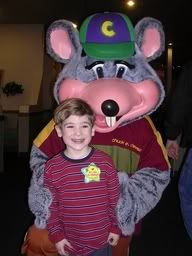
    A Boy and his Mouse~  


    Housing the Homeless

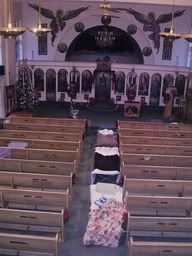
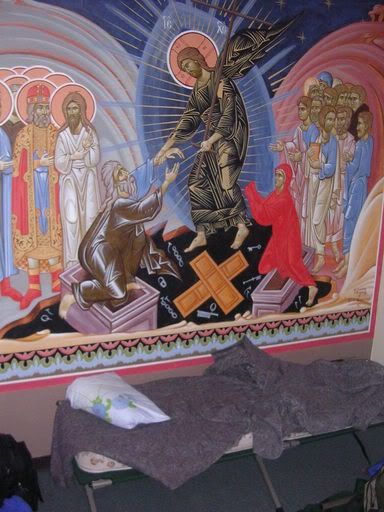
    Below are photos of our Church filled with the beds of our homeless guests. The Church hall flooded after days of snow and rain and everyone was moved into the Church Nave. We had 25 guests including a young mother with two young children. What a beautiful and peaceful place to spend the night. 


    The Icon of the Nativity of Christ
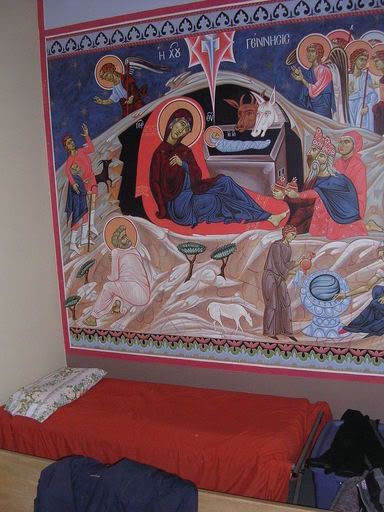


    The Icon of the Ressurection of Christ.


    FIVE Chrismations and THREE Baptisms!


    After months of preparation we drove to the other end of the state to meet Alana and her family. Alana is just as beautiful, godly , sweet funny and smart in person as she is online. He dh is a lovely man and her children are delightful and very well behaved. Our children played beautifully together all day long. My boys were so excited to meet their new Godbrothers and Godsister. I have had a wonderful time preparing and buying all their crosses and new white clothing and presents. It was such a touching day, full of blessings and I am honored and privileged to be the family’s Godmother and to help Alana and Tim raise their children to love, worship and glorify Christ!


    My Goddaughter


    My Godson. He was just beaming the whole day. That child is full of the love of Christ! He knew something special was happening and just kept looking up and smiling at me like that all during the service! He is a joy and a real little man of God! We bonded instantly! Amazing!

    Here he is is about to be immersed in the water 3 times.


    Anointing with Holy Oil for the receiving of the Holy Spirit (Chrismation).


    Addison (Adam) being baptized in the name of the Father, the Son and the Holy Spirit. Look at that face!


    Gwenovere (Genevieve) being baptized.


    Alana’s dh, Tim being chrismated with Holy Oil for the receiving of the Holy Spirit.


    Receiving Holy Communion


    My little guys taking it all in prayerfully.


    Here we all are just after the children’s baptisms and Alana and her dh’s chrismations.


    Sharing our Good News!

     -


     -  


    Metropolitian Nicholas Visits our Church


    visit1.jpg


       The Doxology – just before the beginning of the Divine Liturgy


    visit2.jpg


    Fr. Christos and Deacon Theodore


    visit3.jpg
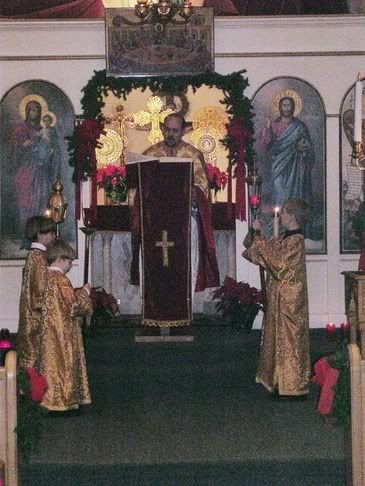
    Metropolitian Nicholas, Deacon Theodore and the altar boys


    visit4.jpg

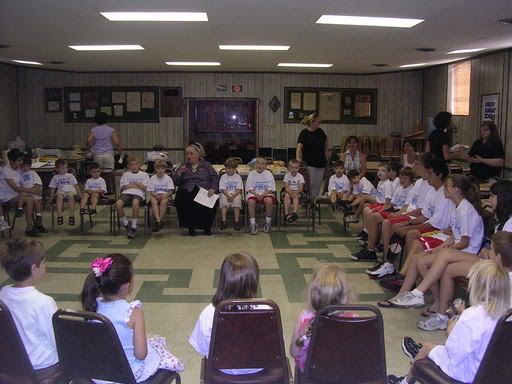
    Metropolitan Nicholas talking to the children


    visit5.jpg

    visit6.jpg

    Metropolitan Nicholas and Deacon Theodore


    visit8.jpg

    Blessing of the loaves (artoclasia)


    VBS and our Godchildren


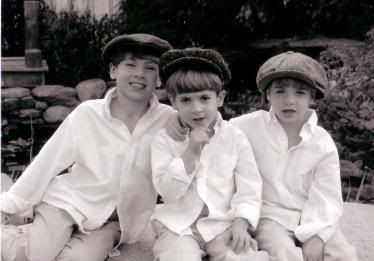
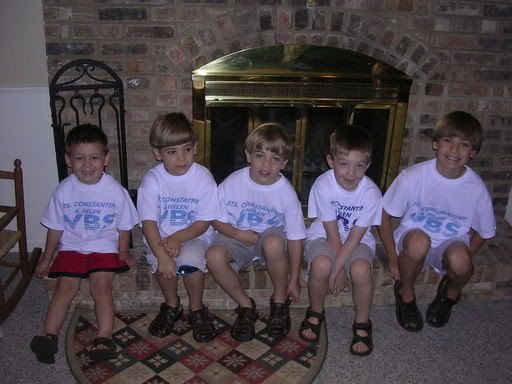
    Here are our boys and their godbrothers on the first morning of VBS.

    DSCN4632.jpg


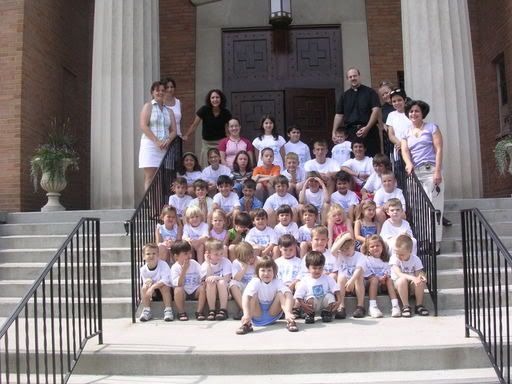
     All the children the first day of VBS.

    DSCN4642.jpg


    Singing with Miss Dolores! Jonah is to her right and Nicholas to her left. Jonah is Miss Dolores’ love and the feeling is mutual! If only he was 70 years older!


    DSCN4635.jpg


    DSCN4689.jpgDSCN4695.jpg


    FLORIDA


    RSCN5088_0369.jpg


    DSCN5126_0273.jpg

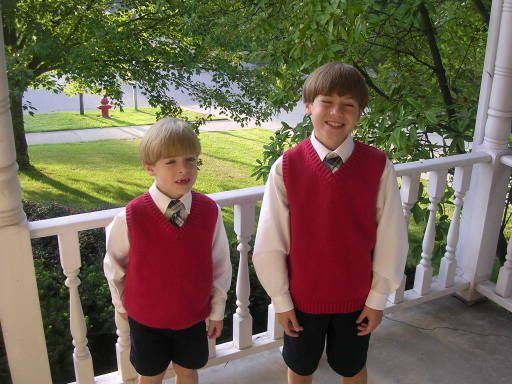
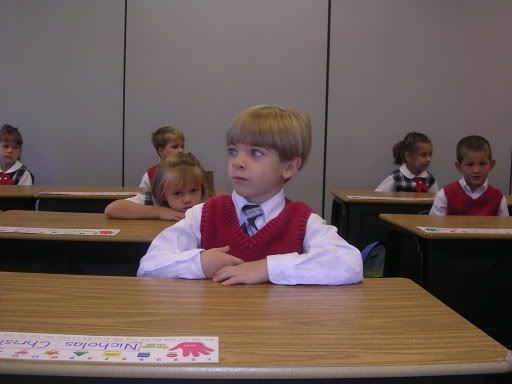
     The first day of Kindergarten and Second Grade


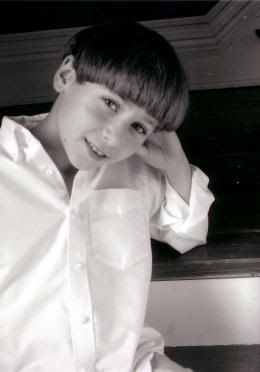
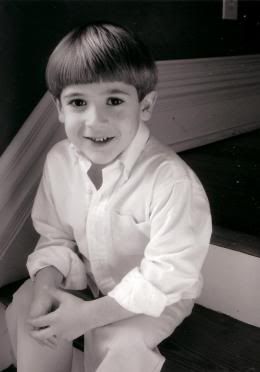
    Nicholas and Basil


    Picture260.jpg


    Picture264.jpg


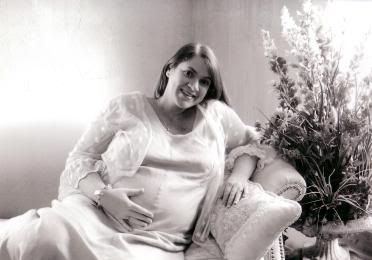
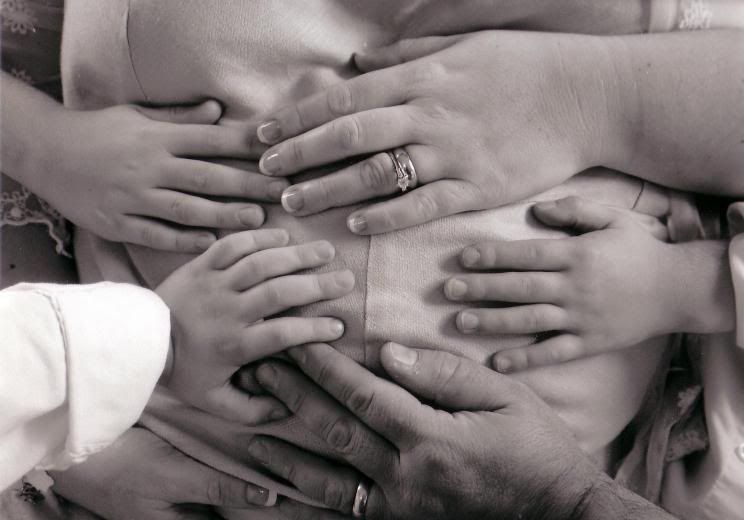
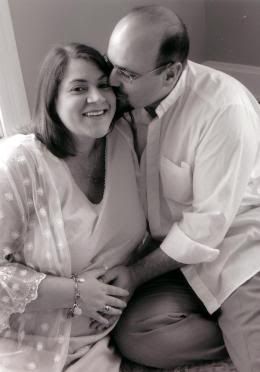
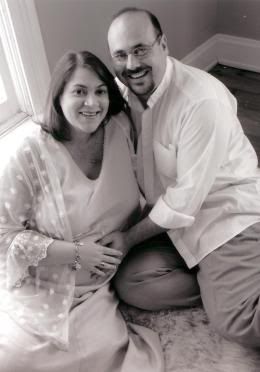
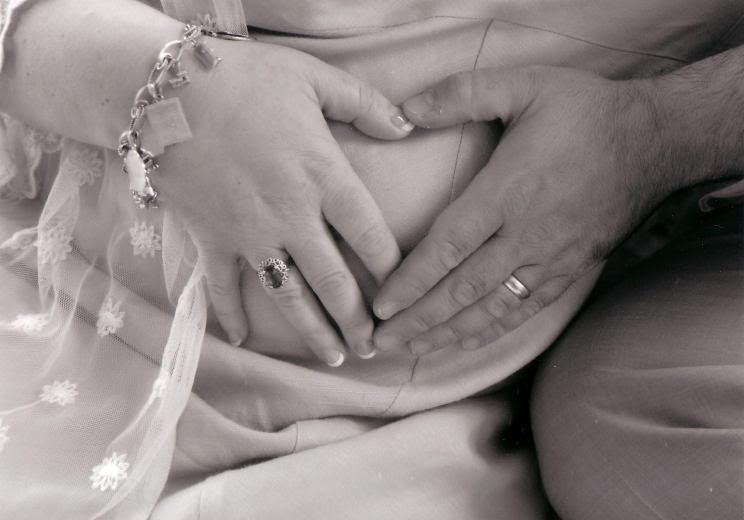
    Waiting for Baby


    Scan10010.jpg


    Scan10005.jpg


    Scan10011.jpg

    Scan10013.jpg


    Scan10012.jpg


    Scan10006.jpg


    Scan10001.jpg


    Scan10003.jpg


    boysonbridge.jpg


    Scan10004.jpg


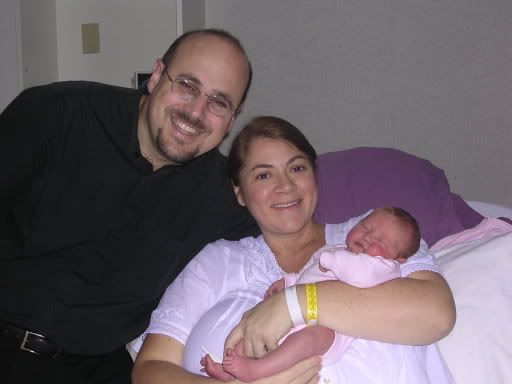
    Maria~Angelica Arrives!


    babysbirth188.jpg


    babysbirth189.jpg


    babysbirth107.jpg


    babysbirth115.jpg
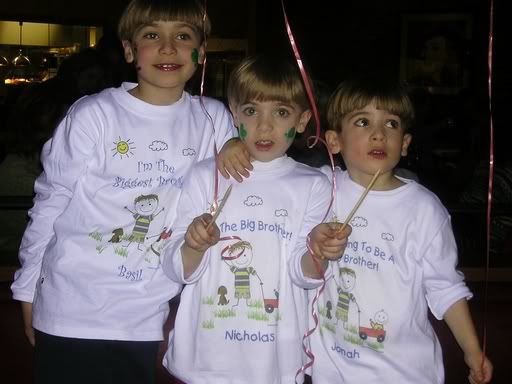
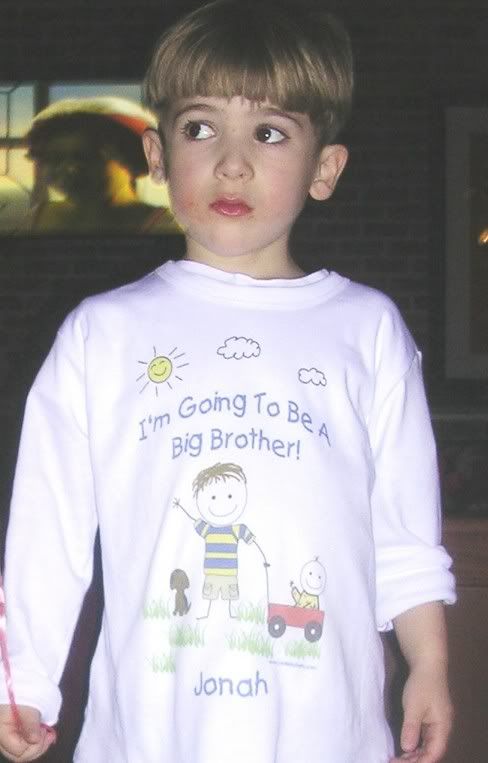
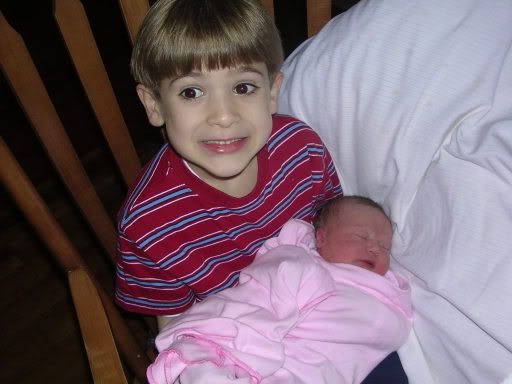
    Jonah , a big brother at last!


    babysbirth209.jpg
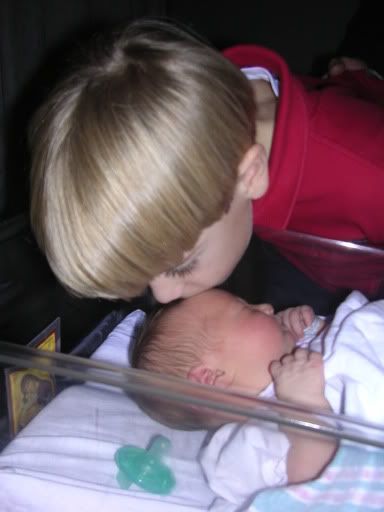
    Nicholas who just loves Maria~Angelica’s soft head.


    babysbirth222.jpg

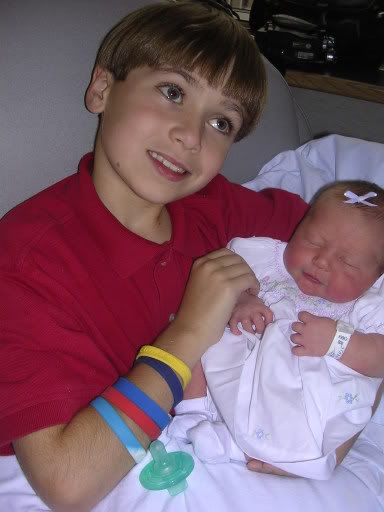
    Basil my trusted helper and very proud big brother! I just love her bow and little dress here. She looks like a little baby doll.


    babysbirth207.jpg


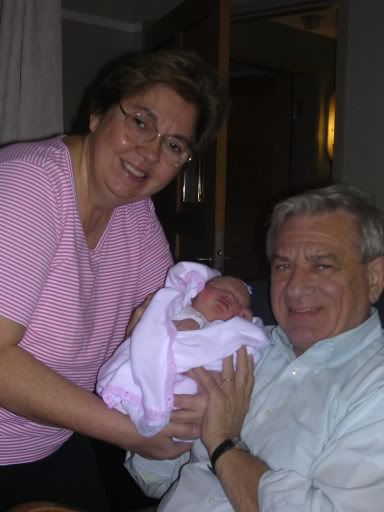
    Yiayia Angie (Angeliki) and Papou Nicholas with their first granddaughter.


    babysbirth182.jpg

    Uncle Michael (my brother) with his first niece.


    Christmas Program at School


    photo


    photo


    Nativity Program at Church


    photo


    photo 


    photo 


    Baby’s First Christmas


    photo


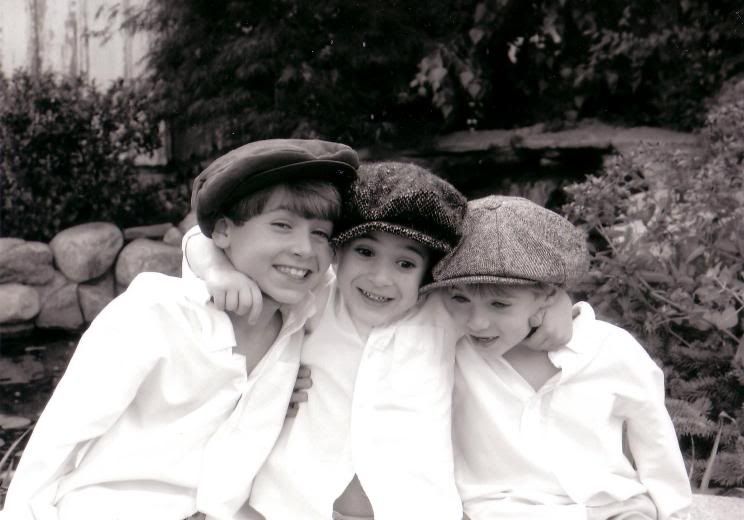
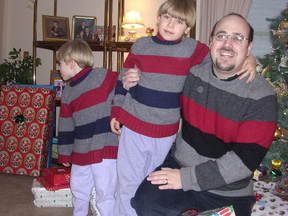
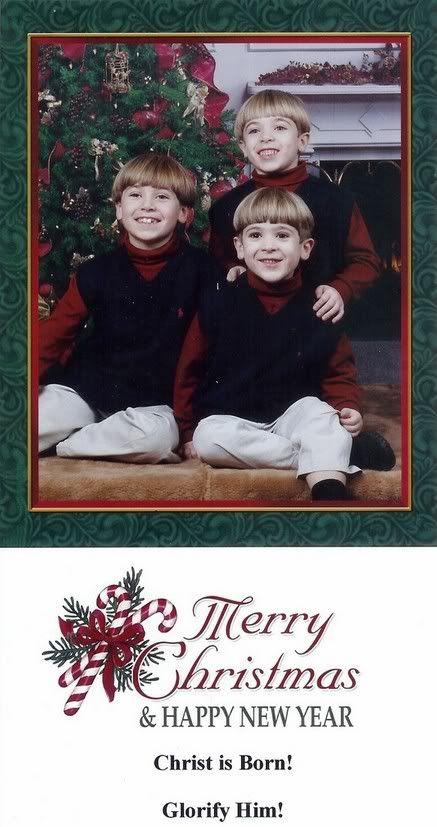
  •  I hope to be able to post some photos of the last couple weeks with our company from England, Chyrsa and family.  In the meantime here are some from last Christmas. LOL!! I am lamenting the fact that an era has come to an end and I now have a fashion conscious  8 year old boy who no longer wishes to match his brothers. I have a feeling this year’s photos won’t look as nice as last year’s! LOL These last two weeks have flown by and was a whirlwind. I have still not finished preparing the house for our friends’ visit and they are now on their way back to London. I also still have some shopping to do, things to get mailed and phone calls to make. I apologize to my Godchildren and relatives that haven’t yet received anything from us. Soon it will be on its way! Life with a newborn and not getting a full night’s rest has a way of making me move in slow motion; I am ever so grateful for that extra second we are gaining this year!!!


    Church.jpg


    DSCN3672.jpg


    DSCN3667.jpg

    DSCN3674.jpg


    DSCN3647.jpg


    DSCN3652.jpg


    0ba01f04.jpg


  • Christ is Born! Glorify Him!


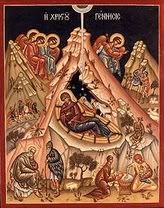
    nativityicon.jpg


    The Nativity of our Lord God and Savior Jesus Christ

    Our Lord Jesus Christ, the Savior of the world, was born of the Most Holy Virgin Mary in the city of Bethlehem during the reign of the emperor Augustus (Octavian). Caesar Augustus decreed that a universal census be made throughout his Empire, which then also included Palestinian Israel. The Jews were accustomed to be counted in the city from where their family came. The Most Holy Virgin and the Righteous Joseph, since they were descended from the house and lineage of King David, had to go to Bethlehem to be counted and taxed.

    In Bethlehem they found no room at any of the city’s inns. Thus, the God-Man, the Savior of the world, was born in a cave that was used as a stable.

    “I behold a strange and most glorious mystery,” the Church sings with awe, “Heaven, a Cave; the Virgin the Throne of the Cherubim; the Manger a room, in which Christ, the God Whom nothing can contain is laid.” (Irmos of the 9th Ode of the Nativity Canon).

    Having given birth to the divine Infant without travail, the Most Holy Virgin “wrapped Him in swaddling clothes, and laid Him in a manger” (Luke 2:7). In the stillness of midnight (Wisdom of Solomon 18:14-15), the proclamation of the birth of the Savior of the world was heard by three shepherds watching their flocks by night.

    An angel of the Lord (St Cyprian says this was Gabriel) came before them and said: “Fear not: for behold, I bring you good tidings of great joy, which shall be to all people. For unto you is born this day in the city of David a Savior, Who is Christ the Lord” (Luke 2:10-11). The humble shepherds were the first to offer worship to Him Who condescended to assume the form of a humble servant for the salvation of mankind. Besides the glad tidings to the Bethlehem shepherds, the Nativity of Christ was revealed to the Magi by a wondrous star. St John Chrysostom and St Theophylactus, commenting on St Matthew’s Gospel, say that this was no ordinary star. Rather, it was “a divine and angelic power that appeared in the form of a star.” St Demetrius of Rostov says it was a “manifestation of divine energy” (Narrative of the Adoration of the Magi). Entering the house where the Infant lay, the Magi “fell down, and worshipped Him: and when they had opened their treasures, they presented Him gifts: gold, and frankincense, and myrrh” (Mt 2:11).

    The present Feast, commemorating the Nativity in the flesh of our Lord Jesus Christ, was established by the Church. Its origin goes back to the time of the Apostles. In the Apostolic Constitutions (Section 3, 13) it says, “Brethren, observe the feastdays; and first of all the Birth of Christ, which you are to celebrate on the twenty-fifth day of the ninth month.” In another place it also says, “Celebrate the day of the Nativity of Christ, on which unseen grace is given man by the birth of the Word of God from the Virgin Mary for the salvation of the world.”

    In the second century St Clement of Alexandria also indicates that the day of the Nativity of Christ is December 25. In the third century St Hippolytus of Rome mentions the Feast of the Nativity of Christ, and appoints the Gospel readings for this day from the opening chapters of St Matthew.

    In 302, during the persecution of Christians by Maximian, 20,000 Christians of Nicomedia (December 28) were burned in church on the very Feast of the Nativity of Christ. In that same century, after the persecution when the Church had received freedom of religion and had become the official religion in the Roman Empire, we find the Feast of the Nativity of Christ observed throughout the entire Church. There is evidence of this in the works of St Ephraim the Syrian, St Basil the Great, St Gregory the Theologian, St Gregory of Nyssa, St Ambrose of Milan, St John Chrysostom and other Fathers of the Church of the fourth century.

    St John Chrysostom, in a sermon which he gave in the year 385, points out that the Feast of the Nativity of Christ is ancient, and indeed very ancient. In this same century, at the Cave of Bethlehem, made famous by the Birth of Jesus Christ, the empress St Helen built a church, which her mighty son Constantine adorned after her death. In the Codex of the emperor Theodosius from 438, and of the emperor Justinian in 535, the universal celebration of the day of the Nativity of Christ was decreed by law. Thus, Nicephorus Callistus, a writer of the fourteenth century, says in his History that in the sixth century, the emperor Justinian established the celebration of the Nativity of Christ throughout all the world.

    Patriarch Anatolius of Constantinople in the fifth century, Sophronius and Andrew of Jerusalem in the seventh, Sts John of Damascus, Cosmas of Maium and Patriarch Germanus of Constantinople in the eighth, the Nun Cassiane in the ninth, and others whose names are unknown, wrote many sacred hymns for the Feast of the Nativity of Christ, which are still sung by the Church on this radiant festival.

    During the first three centuries, in the Churches of Jerusalem, Antioch, Alexandria and Cyprus, the Nativity of Christ was combined together with the Feast of His Baptism on January 6, and called “Theophany” (“Manifestation of God”). This was because of a belief that Christ was baptized on anniversary of His birth, which may be inferred from St John Chrysostom’s sermon on the Nativity of Christ: “it is not the day on which Christ was born which is called Theophany, but rather that day on which He was baptized.”

    In support of such a view, it is possible to cite the words of the Evangelist Luke who says that “Jesus began to be about thirty years of age” (Luke 3:23) when He was baptized. The joint celebration of the Nativity of Christ and His Theophany continued to the end of the fourth century in certain Eastern Churches, and until the fifth or sixth century in others.

    The present order of services preserves the memory of the ancient joint celebration of the Feasts of the Nativity of Christ and Theophany. On the eve of both Feasts, there is a similar tradition that one should fast until the stars appear. The order of divine services on the eve of both feastdays and the feastdays themselves is the same.

    The Nativity of Christ has long been counted as one of the Twelve Great Feasts. It is one of the greatest, most joyful and wondrous events in the history of the world. The angel said to the shepherds, “Behold, I bring you good tidings of great joy, which shall be to all people. For unto you is born this day in the city of David a Savior, Who is Christ the Lord. And this shall be a sign unto you: you shall find the babe wrapped in swaddling clothes, lying in a manger. Then suddenly there was with the angel a multitude of the heavenly hosts, glorifying God and saying: Glory to God in the Highest, and on earth peace, good will toward men.” Those who heard these things were astonished at what the shepherds told them concerning the Child. And the shepherds returned, glorifying and praising God for all the things that they had heard and seen” (Luke 2:10-20).

    Thus the Nativity of Christ, a most profound and extraordinary event, was accompanied by the wondrous tidings proclaimed to the shepherds and to the Magi. This is a cause of universal rejoicing for all mankind, “for the Savior is Born!”

    Concurring with the witness of the Gospel, the Fathers of the Church, in their God-inspired writings, describe the Feast of the Nativity of Christ as most profound, and joyous, serving as the basis and foundation for all the other Feasts.

    Christ is Born! Glorify Him!

    See also: Discourse on the Nativity of Christ by Saint Gregory Thaumatourgos, Bishop of Neocaesarea.


  • Eve of the Nativity of our Lord


    Apolytikion:

                         Fourth Tone

                         As the fruit of David’s seed, Mary was registered of old with the Elder Joseph in the little town of Bethlehem, when she conceived with a seedless and pure conception. Behold, the time was come that she should bear her Child, but no place was found within the inn for them; yet the cave proved a delightful palace for the pure Lady and Queen of all. For Christ is born now to raise the image that had fallen aforetime.

    Kontakion:

                         Third Tone

                         On this day the Virgin cometh to a cave to give birth to God the Word ineffable, Who was before all the ages. Dance for joy, O earth, on hearing the gladsome tidings; with the Angels and the shepherds now glorify Him Who is willing to be gazed on as a young Child Who before the ages is God.


    Quirinius was governor of Syria. And all went to be enrolled, each to his own city. And Joseph also went up from Galilee, from the city of Nazareth, to Judea, to the city of David, which is called Bethlehem, because he was of the house and lineage of David, to be enrolled with Mary, his betrothed, who was with child. And while they were there, the time came for her to be delivered. And she gave birth to her first born son and wrapped him in swaddling clothes, and laid him in a manger, because there was no place for them in the inn.


    And in that region there were shepherds out in the field, keeping watch over their flock by night. And an angel of the Lord appeared to them, and the glory of the Lord shone around them, and they were filled with fear. And the angel said to them, “Be not afraid; for behold, I bring you good news of a great joy which will come to all the people; for to you is born this day in the city of David a Savior, who is Christ the Lord. And this will be a sign for you: you will find a babe wrapped in swaddling clothes and lying in a manger.” And suddenly there was with the angel a multitude of the heavenly host praising God and saying, “Glory to God in the highest, and on earth peace among men with whom he is pleased!”


    When the angels went away from them into heaven, the shepherds said to one another, “Let us go over to Bethlehem and see this thing that has happened, which the Lord has made known to us.” And they went with haste, and found Mary and Joseph, and the babe lying in a manger. And when they saw it they made known the saying which had been told them concerning this child; and all who heard it wondered at what the shepherds told them. But Mary kept all these things, pondering them in her heart. And the shepherds returned, glorifying and praising God for all they had heard and seen, as it had been told them.


    The Reading is from Luke 2:1-20

    In those days a decree went out from Caesar Augustus that all the world should be enrolled. This was the first enrollment, when Quirinius was governor of Syria. And all went to be enrolled, each to his own city. And Joseph also went up from Galilee, from the city of Nazareth, to Judea, to the city of David, which is called Bethlehem, because he was of the house and lineage of David, to be enrolled with Mary, his betrothed, who was with child. And while they were there, the time came for her to be delivered. And she gave birth to her first born son and wrapped him in swaddling clothes, and laid him in a manger, because there was no place for them in the inn.


    And in that region there were shepherds out in the field, keeping watch over their flock by night. And an angel of the Lord appeared to them, and the glory of the Lord shone around them, and they were filled with fear. And the angel said to them, “Be not afraid; for behold, I bring you good news of a great joy which will come to all the people; for to you is born this day in the city of David a Savior, who is Christ the Lord. And this will be a sign for you: you will find a babe wrapped in swaddling clothes and lying in a manger.” And suddenly there was with the angel a multitude of the heavenly host praising God and saying, “Glory to God in the highest, and on earth peace among men with whom he is pleased!”


    When the angels went away from them into heaven, the shepherds said to one another, “Let us go over to Bethlehem and see this thing that has happened, which the Lord has made known to us.” And they went with haste, and found Mary and Joseph, and the babe lying in a manger. And when they saw it they made known the saying which had been told them concerning this child; and all who heard it wondered at what the shepherds told them. But Mary kept all these things, pondering them in her heart. And the shepherds returned, glorifying and praising God for all they had heard and seen, as it had been told them.


    Overheard from the family room just now:


    TV: Christmas isn’t just about presents you know.


    Nicholas :  No , it is about Jesus!


    Me : (from the study) Bravo sou Nicholas!!! (Greek for good for you Nicholas!)


    We are getting ready to go to Vesperal Christmas Eve Liturgy in a little bit. We are enjoying our Christmas company and looking forward to tomorrow!


    Merry Christmas everyone!


    Christ is Born!


    Glorify Him!


  • I just have to share that Tracy sent me a lovely package of presents including,  these darling socks ,when the baby was born and I didn’t  realized that they looked like shoes until  yesterday!  I must have been seriously out of it these last 8 weeks!! To be fair I hadn’t actually put them on her feet until yesterday. I thought they were adorable even before I figured it out. Man I just can’t get over how I totally missed that. They are called Mary Jane’s and come in a darling little shoe box. Makes me wonder what else I am just not getting…. Am I losing it???

  • So much to share with you….. so little time…..


    I am really glad Tracy is blogging now!!!


    Don’t let all the last minute rush make you forget the “reason for the season”.


    “Your birth, O Christ our God, dawned the light of knowledge upon the earth. For by Your birth those who adored stars, were taught by a star, to worship You, the Sun of Justice and to know You, Orient from on High. O Lord, glory to You.”


  • Well the day is almost done but I couldn’t end it without mentioning that Maria~Angelica is two months old today! It has been a good two months; I have tried to just absorb every minute of her new little life.  She has had a good two months, sleeping , eating and cooing. I just love her little coos everyone of them brings me right back to the moment that she let me know she had been born! In every way that child is a little miracle and we never for one minute forget what a true blessing she is! She weighs 10 lbs now and is smiling  and making eye contact! She loves to stare at shadows too.


    I have a lot of wonderful helpers right now. Our friends are here from London. The children can’t get enough of the baby. They are all real sweet about sharing her with one another. We are really enjoying having David, Chrysa and the children here with us, they are great company!


    I hope to post some pictures soon.


    Glory be to God for the blessing of all my children , I am so very , very grateful for my health and the health of my family and friends.

  • Wonderful, sometimes painful, article. Emphasis mine. Thank you Jenny for posting it on Orthodox Chat.


    All four of my grandparents  were Greek immigrants and I am forever grateful and mindful of their sacrifice and the gift of the Holy Orthodox Christian faith that they passed on to me. Glory be to God for all things!


    The Mission of the Greek Orthodox Parish in America


    by: George Nicozisin

    Prologue
    Thanks to Alex Haley we have come to appreciate the importance of “roots.” We, too, must take a look at our roots in order to comprehend, grasp and accept the mission of the parish here in America. However, before we address the current mission of the parish, we first need to turn to the lessons of the past and look at how church history in America affected the mission of the parish. This historical backdrop notwithstanding, we will see that the aims and purposes ­ in short ­ the mission of the parish remain the same. The parish was and continues to be the rallying point and force around which Orthodox Christians find both solace and strength. The Church began with humble beginnings and grew by leaps and bounds. During the Great Depression the Church was there to counsel and nurture. And even though many changes have occurred from the early years of this century through World War II and since, the mission of the Church and parish remain constant: to evangelize, to safeguard family values and to share the beauty and fullness of Orthodox Christianity with the rest of America. Join me in a historical jet trip through the past, to help us better understand today and the future.

    Greeks in America Before the Immigration Period
    The first Greeks on American soil came in 1767
    , when Dr. Andrew Turnbull was given 20,000 acres of uncultivated Florida land by the English government. Turnbull brought 200 men from Mani, Greece, along with an equal number of Italians and Corsicans. They were to work as indentured servants for three years and then be given free title to fifty acres. Turnbull, however, did not honor the terms of the contract. Those who did not die from heat, exhaustion and/or bad food stole away to St. Augustine, a few miles to the north.

    Neither these Greeks nor others who came to America during and after the Greek War of Independence established themselves as Greek Orthodox, nor did they found churches and perpetuate the religious beliefs of their forebears. Perhaps the most important reason for their absorption into the mainstream of America, and their religious and ethnic eradication, was the conspicuous absence of Greek Orthodox parishes and clergymen. The first to recognize these primary needs were the Greek import-export merchants. In 1851, the House of Rallis opened branch offices in New York, New Orleans and Savannah, to import foreign goods and to export cotton. By the 1860s, quite a few Greek cotton merchants were residing in New Orleans with their families. In 1864 they organized the first Greek Orthodox parish in America, dedicating it to the Holy Trinity, and in 1866 they built their first house of worship. Although an attempt was also made to organize a parish in New York, this did not happen until the immigration period began in 1890.

    Greek Immigration Period
    First, we must note that America is an unprecedented phenomenon. The English who went to India, the French and Dutch who went to Indonesia, the Germans who went to China and those from Belgium who went to the Congo didn’t become citizens of those countries. But this did happen in America ­ then in Canada and Australia.

    The Greeks who came to America were unlike the Greeks who had gone to Russia, Egypt, Africa, India, China and the various Western European countries. Those coming to America were usually uneducated, agrarian peasants of mainland Greece who could not better themselves economically in their homeland. They were also Greek nationals fleeing from the eastern tier of Greece, the Dodecanese and other Turkish islands in the Aegean Sea, which were being liberated from the Turkish yoke of Ottoman oppression. These Greeks came for economic reasons: to pay off debts back home; to provide dowries for their unmarried daughters and sisters; to educate offspring; to make a mint and go back and live happily ever after!

    The Greek immigration period began in the last decade of the nineteenth century. By the end of the first decade of the twentieth century, there were over fifty Greek Orthodox parishes. The first parishes were founded in New York City, Lowell, Massachusetts and Chicago, Illinois. They, along with other parishes, were founded by the faith, dedication and initiative of the lay immigrants who recognized the need for a parish mission to meet their religious and sacramental needs.

    Early Beginnings of the Greek Orthodox Church in America
    At the beginning, the Greek Orthodox parishes were under the jurisdiction of the Ecumenical Patriarchate of Constantinople. However, priests were being dispatched and assigned from both the Patriarchate and the Holy Synod of Greece. For the most part these priests were theologically trained. But since there was no bishop to assign the priests, nor from whom they could seek redress, the priests were generally at the mercy and disposition of the lay leaders who had introduced the process of “hiring and firing.” Thus, in the absence of a bishop from 1890 to 1918 the Protestant concept of locally-owned and locally-governed churches began to proliferate.

    As the Church grew in numbers, the problems of uniformity, conformity and cooperation become more complex. Therefore, the priests and lay leaders in the Greek Orthodox churches in America petitioned the Patriarchate to assign a bishop who would organize the churches into a uniform and canonical diocese. Instead, in March of 1908 Patriarch Joachim III transferred spiritual jurisdiction of the Greek Orthodox churches in America to the Holy Synod of Greece. Rather than solving the problem, this action greatly aggravated it because it politicized the mission of the parish. Nevertheless, the parishes continued to grow and meet the spiritual needs of the people.

    As the first World War surfaced, two political statesmen emerged in Greece, King Constantine and Prime Minister Eleftherios Venizelos. Venizelos wanted Greece to go in with the allies while King Constantine, whose wife was Kaiser Wilhelm’s sister, wanted Greece to remain neutral. The political power struggle in Greece wreaked upheaval and havoc on the Greek parishes in America. The Greek immigrants, just as the citizens of Greece, found themselves split into two political factions, venizelist and royalist. This is more readily understood when we recall that many immigrants had no intention of remaining in America. They had come for economic reasons and in due time would return to their cherished homeland. The 1908 Tome was still in effect during this time. Archbishop Theoklitos of Athens, a staunch royalist, was forced to resign and in his place Archbishop Meletios Metaxakis was elected and enthroned. Since he replaced Theoklitos, Meletios was labeled a Venizelist.

    Formation of the Greek Orthodox Archdiocese of North and South America
    One of the very first things Archbishop Meletios did was to take a trip to America. He assigned Bishop Alexander of Rodostolou as Synodical Vicar for the Greek Orthodox churches in America on October 29, 1918. Meletios returned to Athens to find that he had been deposed and that Theoklitos had been reinstated. Meletios returned to America and, jointly with Bishop Alexander, called the First Clergy-Laity Congress in September of 1921, something unheard of in Orthodox countries. This set the precedent for convening Clergy-Laity Congresses. At the conclave, papers were drawn up and the Constitution of the Greek Orthodox Archdiocese of North and South America was ratified. The following year Meletios Metaxakis was elected Ecumenical Patriarch. Under his aegis the 1908 Tome was rescinded and the jurisdiction of the Greek churches in America was returned to the care and mantle of the Ecumenical Patriarch. On May 11, 1922, the Patriarchate officially recognized the Greek Orthodox Archdiocese of North and South America.

    Although the lion’s share of the communities affiliated and came under the jurisdiction of the canonical Archdiocese, a small but vocal group remained separate and retained their autonomy. They were the royalists. They petitioned Archbishop Theoklitos of Athens to send a bishop under the newly-designated “Synodical Autocephalous Exarchate of the Greek Orthodox Church of America,” with Diocesan Headquarters in Lowell, Massachusetts. Metropolitan Germanos Tryanos of Sparta, a dynamic and charismatic churchman, was appointed to shepherd the dissident group. The disputes and quarrels that ensued were compounded by endless court litigation vying for jurisdictions and properties.

    Under normal circumstances the inevitable preoccupation in the early years of any immigrant group is mere survival. Although the Greek immigrants had come a long way in their establishment, adjustment and orientation in the New World, they were not steeped in the interpretation of theology and canon law. Their recourse was to be led by the fervor of their daily emotions sparked by political leaders and generated by the Greek newspapers which took sides. With each shipload of immigrants the feud and opposition grew; more communities were established; more priests were brought from the homeland, while others were ordained here according to their political leanings. In a normal course of growth these events would be favorable and desirable. Not so in this case because dissension grew monstrously as clergy and laity were polarized as royalists or venizelists. These emotional dynamics had an inordinate negative impact on the mission of the parishes in America.

    The friction was compounded in 1924, when both the Ecumenical Patriarchate of Constantinople and the Greek Orthodox Church of Greece jointly adopted the Gregorian calendar. (The Julian calendar was introduced by Julius Caesar in 46 B.C., and was used until it was corrected in 1582 A.D. Since the correction was introduced during the time of Pope Gregory XIII, it is called the Gregorian calendar. The Julian calendar is approximately thirteen days behind the Gregorian calendar.) The royalists kept the Julian calendar and were called “Paleo-Imerologites” (Old-Calendarists.)

    In May of 1930 Patriarch Photios and Archbishop Chrysostomos Pappadopoulos of Athens jointly directed Metropolitan Damaskenos of Corinth to assume temporary administration of the 133 communities of the autocephalous group. Damaskenos recommended that all bishops of both groups return to Greece and the Patriarchate for reassignment.

    At this time Metropolitan Athenagoras Spyrou of Kerkyra was elected Primate of the Greek Orthodox Archdiocese of North and South America. He arrived in New York February 24, 1931 and set about reuniting the communities in good order. Athenagoras’ seventeen-year tenure of office brought most of the dissident and recalcitrant churches back into the fold. Metropolitan Michael Constantinides of Corinth succeeded Athenagoras when the latter became Ecumenical Patriarch of Constantinople in 1949. Metropolitan Iakovos Coucouzis succeeded Michael and was enthroned April 1, 1959. Through the concerted efforts and great patience of these three prelates practically all the former royalist parishes returned to the canonical archdiocese. (The present day Old Calendarist group with headquarters in Astoria, N.Y. is not to be confused with the former royalist group.) Archbishop Iakovos retired in July of 1996 and was succeeded by Metropolitan Spyridon Papageorge of Italy, who was enthroned as Archbishop of the Greek Orthodox Archdiocese of America in September of 1996.

    Definition of a Greek Orthodox Parish in America
    The original Certificate of Incorporation of the Greek Orthodox Archdiocese of North and South America in 1921-1922 proclaimed that the communities/parishes have the charge and responsibility to:

    “Edify the religious and moral life of the Greek Orthodox Christians in North and South America on the basis of the Holy Scriptures, the rules and canons of the Holy Apostles and of the Seven Ecumenical Councils of the ancient and undivided Church as they are or shall be actually interpreted by the Great Church of Christ in Constantinople.”

    Shortly after, when Archbishop Iakovos became primate of our Archdiocese, he characterized and described our parishes as follows:

    “Our parishes in America began as organizations and developed into religious communities. Today they are churches. Around them our whole life is entwined and is developed. Thus we have accepted what St. Paul states with these words: ‘Whether we live or die, we are the Lord’s’ (Rom. 14: 8 ). We are born and we die in the bosom of the Church. We place all our hopes for the future in the Church, for the Church alone will remain as the divine and eternal institution. And for this reason we have made the Church the center of our lives. The Church is everything to us!”

    The definition, aims, purposes and mission of the parish have gone through a development and an evolution since 1922. The most significant change took place at the 1964 Clergy-Laity Congress in Denver, Colorado. Under the aegis and persistence of Archbishop Iakovos the new Uniform Parish Regulations are presented in a concise and clear language as follows:

    “The parish is the local eucharistic community of the Church in a given locality, organized under the jurisdiction of the Archdiocese, whose ecclesiastical authority is its canonically consecrated Bishop. The aims and purposes of the parish are to keep, practice and proclaim the Orthodox Christian Faith pure and undefiled.”

    This same language is in the Special Regulations and Uniform Parish Regulations we presently have. But the mission of the Church is far greater and it goes beyond regulations and descriptions. The parish mission is one that has been and is being lived by both clergy and laity, especially by those who know and live the difference between “Assimilation” and “Integration.”

    Assimilation versus Integration
    Our Archdiocese has grown tremendously since the immigration period. Nevertheless, she has lost a significant number of her members, actual as well as potential, since the immigration period. It is my contention that confusion between assimilation and integration have contributed.

    Assimilation means “to be absorbed, incorporated, to become synthesized, to become just like everybody else, to have no identity any longer.” If we have lost a significant number of actual and potential members of Christ and His Holy Orthodox Church ­ and admittedly we have ­ it is because we have chosen to be “just like everybody else,” as a Greek Orthodox faith, as a culture and as a heritage. Assimilation leads to extinction!

    Conversely, integration means “bring different parts together, to blend, to orchestrate into a whole, yet not lose essence or identity.” Integration as a religion and a cultural heritage means that we offer to contribute our values of a time-tested Orthodox Christian faith to this wonderful country. I suspect a good number of us, first-generation up to the present time, have not fully understood the difference between, on the one hand, letting ourselves be assimilated into extinction and, on the other, learning about our own Greek Orthodox Christian faith, living that faith and integrating our faith into our American nation.

    In his letter to the Romans St. Paul uses a metaphor to illustrate how the Christian Church was “grafted” as a branch into the tree of God’s people. In a similar manner, the founders of our Greek Orthodox parishes began “grafting” (integrating) our two-thousand year old faith into our American Nation. I submit to you that perpetuating this integration with the same zeal and dedication is one of the ongoing missions of our parishes.

    The Mistake of Presumption
    If the immigrant priests, parents and parish leaders share part blame in not understanding and not perpetuating the mission of the parish and the Church, it lies in their inability to perceive what was happening all around them. Their mistake was presumption. They presumed that because they were steeped in their religious faith and cultural heritage that their children would automatically follow suit without question or deviation. Those families that knew the mission of the Church ­ that lived a Christ-centered life, that shared their faith in the Lord and the values of the Bible, and for whom the Greek Orthodox Church was a vibrant, living spiritual guide ­ had far better results. Those parishes that invested in the future of their youth, through creative religious education programs and meaningful youth activities that were religiously based, morally oriented, and ethically motivated, had far greater dividends.

    On the other hand, those parishes whose parents made very little effort to raise their children in an Orthodox Christian environment were soon disillusioned and embittered when they saw their offspring indiscriminately divesting themselves of the religion and culture of their forefathers because they found them inadequate, antiquated and unimportant! Worse yet, irrelevant!

    By the same token, those Orthodox Christian parishes that spent more time on politics, bickering, infighting and creating animosities and enmities, did far more to disillusion and disenchant young people both from Christ and the Orthodox Church than presumption and assimilation combined! Thank God, a substantial number of families did share the fullness of our Greek Orthodox faith and heritage with their children and their children’s children. This is why our Church has experienced significant growth and has made the great strides she has over this past century.

    The Watered Down Mission of the Parish
    Last but not least, you and I, the first, second and third generations and present day leaders of our parishes, have also played a role in what I would call “The Watered Down Mission of the Parish.” Many of us mistreated Orthodox Christianity like a poor relative. We regarded her as inferior and, more often than not, an embarrassment! We identified the Orthodox Church with a few religious practices we either did not understand or with which we did not agree. We associated the Church with some customs that our parents and grandparents imported from their villages which, more often than not, have nothing to do with our belief in Christ and how we worship Him. Thus we passed sentence on Orthodox Christianity and labeled the Greek Orthodox Church antiquated, superstitious and old-country, fine for the old folks but not for us! Furthermore, we picked and chose the doctrines, teachings and liturgical practices that appealed to us and cast aside those which we did not take the trouble to understand and which did not appeal to us.

    St. Paul uses a marvelous metaphor in 2 Corinthians 4:7 to illustrate how the power, grace and love of God can shine through to all people regardless of intellectual capacity, business acumen and/or station in life, providing we commit ourselves to God and avail ourselves to be a “vessel through which his light can shine.” St. Paul writes: “But we have this treasure in earthen vessels, that the excellence of the power may be of God and not of us.” We must have nothing but admiration, respect and gratitude for the Greek Immigrants ­ clergy and laity ­ who brought the Greek Orthodox faith, culture and heritage to these American shores and passed them on to their offspring. They were truly giants who let God’s light shine with brilliance and splendor! The same must be said about the first, second and now third generations of American born who received the torch of faith and who constitute the clergy and laity leadership in our Greek Orthodox parishes, dioceses and archdiocese today!

    The Mission of the Parish

    Perhaps our insufficient knowledge and understanding have misled us into regarding the Orthodox Church as static, fossilized and anachronistic. Perhaps the Orthodox Christian approach to Christ and salvation has been laying dormant within us for many years. Perhaps we have come to know Christ, either through a peasant faith, as a result of experiences and maturity, or through just plain growing up. Perhaps we have been exposed to Orthodoxy through a marriage or through a concerted effort of catechetical study. This religious faith that helps us face the problems of life, as well as prepares us for salvation, can and must be shared with others. Thus another essential mission of the parish is to evangelize and spread the “Good News.” But in order for us to comprehend the mission of the parish, in order for us to appropriate this faith for ourselves, in order for us to evangelize and share this faith with others, we must read, ingest and digest; we must internalize and externalize what Chapter II, Article I, Section 4 of the Uniform Parish Regulations sets forth succinctly and clearly:

    “The diakonia (work, ministry, mission) of the parish will include proclaiming the Gospel in accordance with the Orthodox Faith, sanctifying the faithful through God’s grace in worship, the Divine Liturgy and the other Sacraments and Devotional Services, enhancing their spiritual life, adding to their numbers by instructing others and receiving them into the Church through Baptism and/or Chrismation, catechizing them in the Orthodox Faith and in the ethos of the Church through the establishment of programs, schools and philanthropic activities, and implementing Christian ministries.”

    An Assaulted and Self-defending Parish
    Before we conclude, there is one more dimension of the parish mission of our time that deserves our undivided attention: An Assaulted and Self-Defending Parish. In order to better comprehend this aspect of the parish mission let us turn to Mk. 13:22 where Jesus warns: “False messiahs and false prophets will arise and show signs and wonders to lead you astray”. The “false messiahs and false prophets” are legion today! In the 1950s and 1960s we saw the rise of the Flower Children and the gurus trying to lull us into an artificial tranquility. Then in the 1970s Transcendental Meditation, Hara Krishna, the Moonies, Scientology and a host of other cults appeared on the American scene. The 1980s unleashed the New Age religion. New Age says we can be gods! That is what the serpent told Adam and Eve in the Garden of Eden. That is what the builders of the Tower of Babel sought. New Age invites us to moral decay and ethical anarchy. “Do whatever you want, when you want and how you want!” What is so appealing about New Age is that nobody loses. There are no moral absolutes. Sin and evil do not exist. New Age is more than a new belief system, or a new religious fad. This is not a matter of fun and games, and it is much more than stress management seminars for adults and rest periods for children. New Age is an insidious evil that can adversely poison our earthly life and influence the loss of our eternal life, as well as those of our loved ones!

    The 1990s ushered in forces not necessarily new but with far greater vigor and stronger commitment. And the ones who are at the greatest risk are our children, because there is a battle going on for their hearts and minds. Television and movies hammer away at moral values and ethical principles. Any form of restraint and self-discipline is ridiculed by the media, friends and acquaintances. Rock concerts, rappers and MTV have a unique way of subjecting masses of emotionally needy kids to deafening sounds, abnormal noises, eerie lights, wild behavior and godless philosophies.

    Why else would healthy boys and girls inject wretched drugs into their veins and fill their lungs with pot? Or give sexual favors to virtual strangers? Or even commit suicide? Their behavior has been warped by enormous social pressures in an environment of confused values and unmet needs. The “false messiahs and false prophets” of today are alcohol, marijuana, hard drugs, pornography, gambling, homosexual experimentation, pre-marital and extra-marital sex, and morally irresponsible abortion.

    Let’s take a couple of these issues and extrapolate them to their logical conclusion. Why would media people, bureaucrats, researchers and Planned Parenthood types fight so hard to preserve adolescent promiscuity? Their motivation is not that hard to understand. Millions of dollars are generated each year in direct response to sexual irresponsibility. Entire industries of grateful adults benefit. The abortion business alone brings in an estimated $600 million annually. Do we really think the physicians, nurses, medical suppliers and bureaucrats who owe the lion’s share of their livelihood to the destruction of unborn babies would prefer that adolescents abstain from sexual relations until marriage? Something for us to ponder seriously.

    And now a new commodity has come on the medical market: Aborted fetuses. Aborted fetuses are being experimented with to help those with Alzheimer’s disease and other degenerative diseases. The argument given goes like this: If organ donors can help restore quality living to those in need of them, why can’t aborted fetuses be used for the same reason? There is an essential and intrinsic difference. Organ donors release their precious gift upon their death. Fetuses are removed before the infants have an opportunity to life outside the womb. Oh, and by the way, there is movement to petition the Supreme Court to allow abortions at any time so the fetuses can develop and mature and give more yield.

    Another mission for the parish to ponder is pornography, which today is a $8 billion smut industry whose tentacles reach out to all ages. Twenty million pornographic magazines circulate each month. Hustler Magazine features a full-page cartoon of Chester the Molester. Child sexual abuse has tripled in the last generation. The Supreme Court declared that “obscenity shall be determined by local community standards.” And what can be said about the mocking and ridicule of family and the deterioration of family values that proliferate in prime time television?

    The immigrant parents lived a daily drama to hold on tenaciously to their religious beliefs, their culture and heritage in an environment that understood neither them nor their values. The mission of the Greek Orthodox parish of our time deserves ­ indeed demands ­ an awareness and a presence in our times no less a witness than that of our forebears!

    Epilogue
    The first mission of the parish always has been and continues to be the instrument that brings us closer to our Precious Redeemer Jesus Christ and the salvation He offers us. Secondly, the mission of the parish is to meet all our religious, spiritual and sacramental needs.

    When the founding fathers of our great American nation determined there would be separation of church and state, they never intended that church people should remain reticent, silent, remote and removed from the mainstream of the political and judicial arena of American life. Unless we stand up to be heard and counted, not only will we forfeit our role and influence, but we will also lose all our values, our moral roots and our ethics by default. Therefore, another dimension of the mission of the parish is to make known our Orthodox Christian religious viewpoints and our strong moral convictions to all levels of government, the news media and the entertainment field. We must communicate our positions and beliefs on all matters that influence our government, politics and American society. This is an integral and inseparable dimension of our mission as Greek Orthodox parishes in America.

    During the Sacrament of Ordination in the Orthodox Church a very unique act takes place. Once the priest has been ordained and fully vested, the Divine Liturgy continues where it left off. After the consecration of the Holy Gifts, the Bishop places the Communion Amnos (consecrated Body of Christ) into the clasped hands of the newly-ordained priest and has him stand at the Crucifix behind the holy altar table. The celebrant hierarch charges the newly-ordained priest with the following words:

    “Receive this deposit and vigilantly watch over it until the Second Coming of our Lord Jesus Christ, at which time from Him it shall be asked of you!”

    The Orthodox parish has a tremendous mission here in America. May we accept the mission of the parish as a deposit from Christ. May we watch over our parishes vigilantly with a Eucharistic, Sacramental, Evangelical and Christlike leadership, thus knowing that Jesus Christ will ask each of us for an accounting of our leadership, our motives, our deeds and actions.


    © 2003 Greek Orthodox Archdiocese of America


    www.goarch.org


  • Our Life in Christ are offering  free Orthodox Study Bibles. Thank you for the reminder song of ascent .

  •  In Communion » Mother Gavrilia: “A Holocaust to His Love”


    Mother Gavrilia: “A Holocaust to His Love”


    by John Brady


    The roster of 20th-century saints includes some who lived very public lives, such as Russia’s Royal Martyrs, and not a few who strove to live “hid with Christ in God.” Saint Silouan of Mount Athos might have passed without a worldly trace if God had not sent Archimandrite Sophrony to record his life for our benefit.


    Likewise, Mother Gavrilia (+1992), an undoubted Saint (not yet officially glorified) of the Church, lived only to love and serve God in humility — “not to exist” as she herself said. By God’s providence her spiritual daughter and namesake, nun Gavrilia, has assembled for us a radiant biography and collection of the Gerondissa’s sayings, Ascetic of Love, which may prove to be one of the great spiritual testaments of our time.


    Avrilia Papayanni was born in 1897 to a wealthy Greek family in Constantinople, which remained her home until 1923, when the family was deported to Thessalonika as part of the infamous “exchange of populations.” Avrilia entered the University of Thessalonika as the second woman ever to enroll in a Greek university. Though the path to worldly distinction seemed open to this intelligent, unconventional and privileged young woman, she chose another way: in 1932, responding to a command (as she later described it) of Christ Himself, she moved to Athens to live alone and work in nursing homes. She then traveled to England (arriving with one pound to her name) and studied physiotherapy in London. In 1947 she opened her own physiotherapy practice in Athens. Already her nearly-unique path of combined service and hesychia was beginning to emerge: though she had many wealthy clients, she donated her services to the poor, said the Jesus Prayer constantly during her treatment sessions, and healed many by her prayers, often using her medical procedures as “cover” for her wonderworking intercession.


    In 1954 her beloved mother died. The moment was a pivot in her life: she wrote that her mother’s death “severed the last tie that had kept me bound to normal, material life on this Earth. Suddenly I was dead… I was dead to the world.” She spent that entire night awake, her room filled with a blinding radiance coming from the icon of Christ. Within a year she had closed her therapy practice, given all her money and belongings to the poor, resolved to live in absolute poverty, and (now aged almost sixty) headed for India with no plan, but a strong sense that Christ had called her there. (In this time of heightened enmity between Islam and the West, it seems a miracle in itself that only fifty years ago she traveled alone, by bus, from Jordan through Iraq and Iran, to India — and that at every stop she was invited to enter the local mosque to “pray to her God.”)


    Avrilia arrived in India with one dress and a Bible (her only reading at that time) and stayed for five years, at first giving free physiotherapy to lepers and the poor at several clinics and ashrams. She worked and mingled freely with Hindu gurus and protestant missionaries, making no distinctions in her loving openness to all. A casual reader of her biography might fear that she was careless or syncretistic in her Orthodox faith, but a closer reading will put any such concerns to rest. Throughout her years away from Orthodox churches or contacts, she kept the fasts strictly and never prayed with non-Orthodox, Christian or not. (When invited, she would answer “I do not pray aloud and never in company. I pray alone or at Church… but do come and tell me your news over a nice cup of tea.”) The only example that I have found of her ever speaking severely to anyone came when, on a speaking tour, a protestant made a disparaging remark about the most holy Theotokos. Mother Gavrilia immediately took aside the person in charge and said “Brother, I am sorry but I must tell you that as of tomorrow I will no longer be with you… I cannot hear such words for Her, Whom I love most after our Lord Jesus Christ.” Suitable apologies were forthcoming, and the tour continued.


    Toward the end of her time in India, the same Voice that had called her to give her life to the poor led her to spend eleven months in eremitic solitude in the Himalayas. During this time she received the call to monastic life. In 1959 she entered the Monastery of St. Lazarus in Bethany, where she was tonsured a nun after a three-year novitiate, receiving the name Gavrilia.


    The next twenty years were a heady mix of monastic quietude alternating with speaking tours, three years of missionary service in East Africa, and another three years in India working with Fr. Lazarus Moore’s Orthodox community. Archimandrite Sophrony asked her to become abbess of his women’s monastery in England, but she declined — one of the few times that she refused any of the calls to service that repeatedly drew her away from her increasingly cherished silence and solitude.


    In 1979 she was given free use of an apartment in Athens that over the next ten years became known to her disciples as the “House of Angels.” Here she would spend half of each day in prayer, receiving no one, the other half in counseling and healing a stream of visitors. In her last few years she moved to a hermitage in Aegina, then to Leros, where she received the Great Schema in 1991 and reposed in peace the following year.


    Her biography includes (but does not emphasize) a startling series of miracles: a sudden, complete healing from the last stages of Hodgkin’s disease, regeneration of a lens after cataract surgery, out-of-body travel to Mt Sinai, to name a few — but, as one of her spiritual children told me, the most significant miracle for those who knew her was her own presence and her all-pervading love for all. As Nun Gavrilia wrote, “Mother Gavrilia’s entire life, which was a hymn to the Lord, became thanks to Him, a burnt offering, a holocaust to His love.”


    The sweetness and openness of Mother Gavrilia’s character was fed by a quiet but constant askesis and awareness of the rigor of Christ’s commandments. (I was brought up short by her statement that the Christian religion “is for the very few.” By the standards to which she held herself, I am very far from being one of those few.) Even as she extended herself without reserve to serve others, she felt the relative smallness of her service. While living at the New Jerusalem Monastery in Greece (1967, aged 69) she offered free physiotherapy to residents of the Russian Old People’s home. She wrote “You can imagine my joy at being here and treating these aged people… I joke and laugh and see their mournful faces change. What a pity all is so temporary… Unless Joy comes from within — that is from its Source — it does not last. As soon as I leave, it is as if I had never shared His Joy with them. Here I understand the words of Christ: My joy I give unto you: not as the world giveth…”


    Mother Gavrilia’s life obliterated the inane distinctions that we so often make between prayer and service, contemplation and action. She had no theories about the Church, society, the Christian life, or anything else. Her only “program” was to love with the love that proceeds from complete abandonment to Christ, and to act as that love dictated. At one time this might express itself in “social action,” at another time in secluded hesychia. The difference was immaterial because the Source was the same.


    One of the most valuable portions of Ascetic of Love is a luminous collection of her sayings. I can find no better way to close than to quote the first and last of these: “Any place may become a place of Resurrection, if the Humility of Christ becomes the way of our life.”


    John Brady is treasurer of the Orthodox Peace Fellowship in North America. He also is responsible for the web site “God is Wonderful in His Saints” — www.abbamoses.com.


    Fluent in five languages


    Once when I was there where I was, some foreign missionary came and said to me, “You may be a good woman, but you’re not a good Christian.”


    I said, “Why?”


    “Because you have been here so long and you only go about speaking English. What local languages have you learned?”


    I said to him, “I haven’t managed to learn any of the local languages, because I travel a great deal from place to place. As soon as I learn one dialect, they start speaking another. I’ve only learned ‘Good morning’ and ‘Good evening.’ Nothing else.”


    “Bah, you’re no Christian. How can you evangelize? All the Catholics and Protestants learn all the local dialects in order to . . .”


    Then I said, “Lord, give me an answer for him.” I asked it with all my heart, and then I said, “Ah. I forgot to tell you. I know five languages.”


    “Really? What are these five?”


    “The first is the smile; the second is tears. The third is to touch. The fourth is prayer, and the fifth is love. With these five languages I go all around the world.”


    Then he stopped and said, “Just a minute. Say that again so I can write it down.”


    With these five languages you can travel the whole earth, and all the world is yours. Love everyone as your own — without concern for religion or race, without concern for anything.