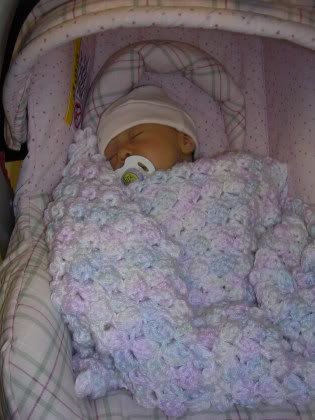
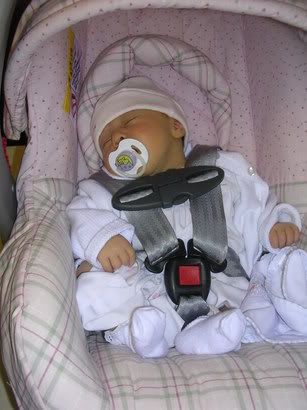
Month: November 2005

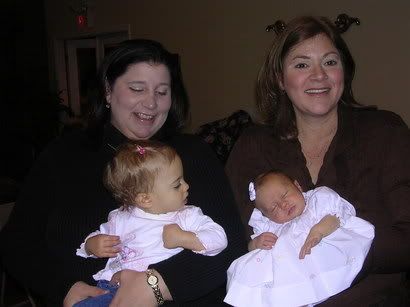
  • 40 Day Blessing for the Newborn


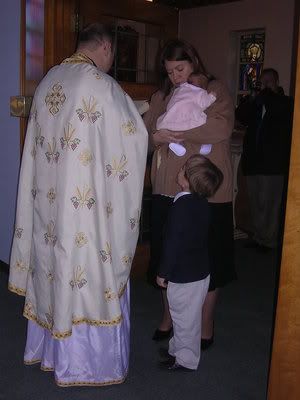
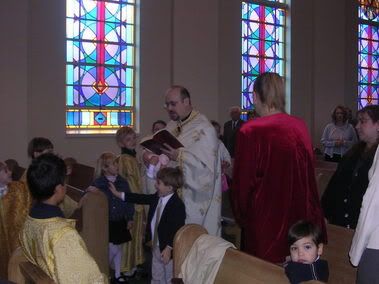
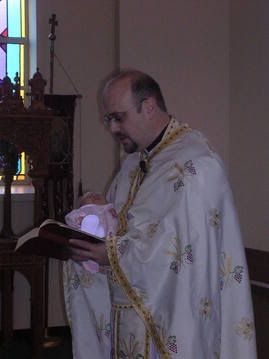
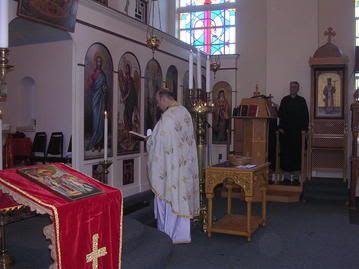
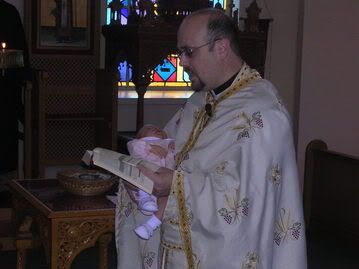
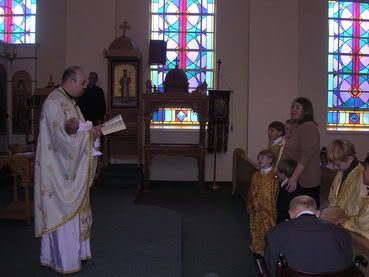
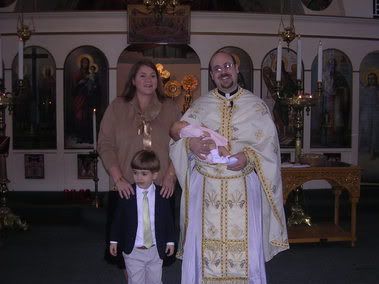
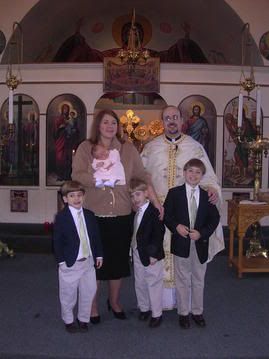
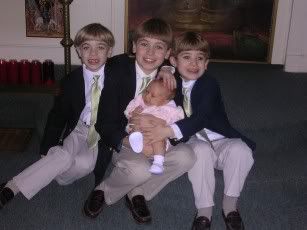
    On the fortieth day after birth, the parents brings the child to church where the priest conducts the service of “40-Day Blessing” or “Sarantismos” for the mother and child.


    “The ritual of the ‘churching’ of women after childbirth has its origin in the early Middle Ages. This was the time when the liturgical life of the Church was beginning to expand and develop in imitation of the Biblical patterns. The “Church” must not be understood in an antiquated way (from the Old Testament) in the sense of a legalistic practice. (For further Old Testament knowledge, read the Book of Leviticus, Chapter 12). Rather, the ceremony of churching marks the time when the mother, having recovered physically and emotionally from the birth of her child, and having re-ordered her life around the child’s care, will resume her life in the community of the Church again. She comes to the church with her child (and accompanied by her husband) to offer her thanksgiving for her child, and coming in contact with the life-giving glory of God, she asks for the forgiveness of her sins, despite her human weakness, so that she may be `worthy to partake, uncondemned, of the Holy Mysteries,’ (that is Holy Communion) once again.


    This ceremony, in imitation of the Old Testament ceremony to which the Mother of God submitted (Luke 2:22-24), was done on the fortieth day after the child’s birth, but may also take place as close to the fortieth day as possible. Some request that this take place prematurely to facilitate their personal needs and desire to attend social engagements. God in His wisdom ordained that a period of six weeks lapse following childbirth before the mother resumes her life. Good advice is not to hasten this process.


    During the churching, the priest, in imitation of the elder Simeon (Luke, Chapter 2), takes the child up to the sanctuary, making the sign of the Cross with it and reciting the prayer of St. Simeon (Luke 2:28-32). Again, inspired by the example of Simeon’s encounter with the infant Messiah, for each child has the potential to be great in the sight of the Lord, the act of churching recognizes this and also serves, as with the mother, to introduce the child to the community of faith.”


    On the day of churching, the parents and the child are invited to wait in the narthex of the church where they will be greeted by the priest. This takes place after the antidoron has been distributed following the Divine Liturgy. For the Service click here


    DSCN5979.jpg


    DSCN5983.jpg


    DSCN5985.jpg


    DSCN5986.jpg

    DSCN5987.jpg


    DSCN5988.jpg

    DSCN5990.jpg


    DSCN5992.jpg


    RSCN6012.jpg


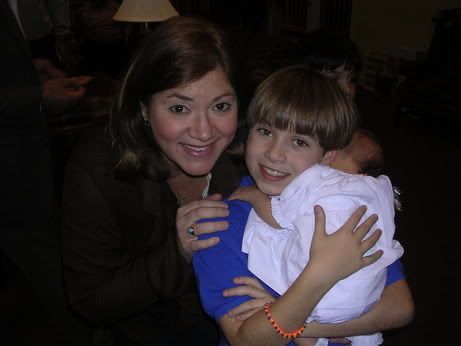
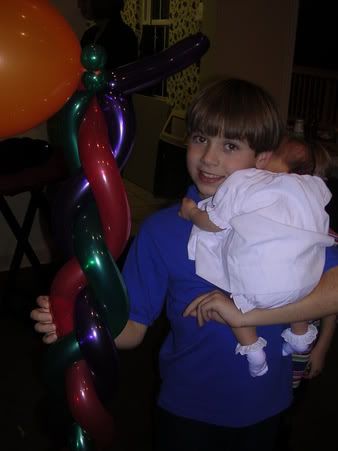
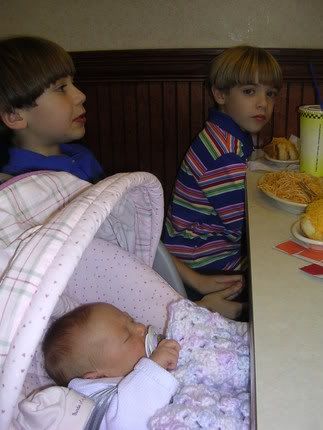
    Me and My Godfather (Nouno George) with Maria~Angelica, the next generation.


    DSCN5999.jpg


    DSCN6018.jpg
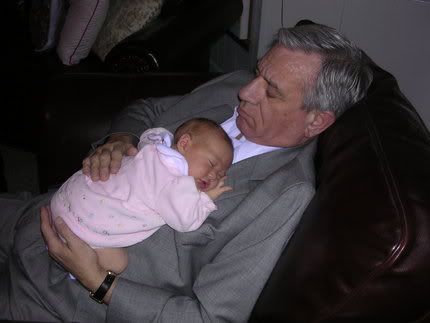
    Papou Nick and Maria~Angelica after a long day.


    DSCN6016.jpg

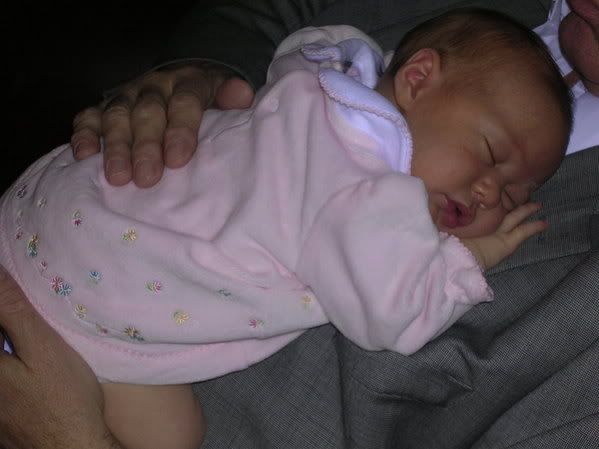
    Tracy do you recognize Maria~Angelica’s dress? I put it on her special for her 40 days.  Thank you so much for all your beautiful gifts! You are too kind!


    Thank you also to Jennifer’s brother Daniel for taking the photos.


  • We have been off line for a couple of days. I am so glad to see www.orthodoxchat.com  up and running and with lots of new posts! Whoo Hoo!


    Maria~Angelica and I had our 40 day blessing today. I hope to post more on that with pictures soon.  I have been wanting to post this article for those of you that have e-mailed me with questions about the Orthodox Church and Orthodox Christianity.  I hope it is helpful.


    Praying you all had a wonderful and safe Thanksgiving weekend.


    The Orthodox Church
    Rev. Thomas Fitzgerald
    Greek Orthodox Archdiocese of America   (Edited By B.C. Chrysostom)

    An ever-growing number of persons from various backgrounds are becoming interested in the Orthodox Church.  These individuals are discovering the ancient faith and rich traditions of the Orthodox Church.  They have been attracted by its mystical vision of God and His Kingdom, by the beauty of her worship, by the purity of her Christian faith, and by her continuity with the past.  These are only some of the treasures of the Church which has a history reaching back to the time of the Apostles.

    The Orthodox Church in this country owes its origin to the devotion of so many immigrants from lands such as Greece, Romania, Russia, the Middle East, and the Balkans.  In the great wave of immigrations in the 19th and 20th centuries, Orthodox Christians from many lands and cultures came to America in search of freedom and opportunity.  Like the first Apostles, they carried with them a precious heritage and gift.  To the New World they brought the ancient faith of the Orthodox Church.

    Many Orthodox Christians in America trace their ancestry to the lands and cultures of Europe and Asia, but the Orthodox Church in the United States is no longer an immigrant Church.  While it contains individuals from numerous ethnic and cultural backgrounds, the majority of her membership is composed of persons who have been born in America.  In recognition of this, Orthodoxy has been formally acknowledged as one of the Four Major Faiths in the United States.  Following the practice of the Early Church, Orthodoxy treasures the various cultures of its people; but it is not bound to any particular culture or people.  The Orthodox Church welcomes all!

    EASTERN CHRISTIANITY
    The Orthodox Church embodies and expresses the rich spiritual treasures of Orthodox (Eastern) Christianity.  The Gospel of Christ was first preached and the First Christian communities were first established in the lands surrounding the Mediterranean Sea.  It was in these eastern regions of the old Roman Empire that the Christian faith matured in its struggle against paganism and heresy.  There, the great Fathers lived and taught.  It was in the cities of the East that the fundamentals of our faith were proclaimed at the Seven Ecumenical Councils.

    The spirit of Christianity which was nurtured in the East had a particular favor.  It was distinct, though not necessarily opposed, to that which developed in the Western portion of the Roman Empire and subsequent Medieval Kingdoms in the West.  While Christianity in the West developed in lands which knew the legal and moral philosophy of Ancient Rome, Eastern Christianity developed in lands which knew the Semitic and Hellenistic cultures.  While the West was concerned with the Passion of Christ and the sin of man, the East emphasized the Resurrection of Christ and the deification of man.  While the West leaned toward a legalistic view of religion, the East espoused a more mystical theology.  Since the Early Church was not monolithic, the two great traditions existed together for more than a thousand years until the Great Schism divided the Church.  Today, Roman Catholics and Protestants are heirs to the Western tradition, and the Orthodox are heirs to the Eastern tradition.

    ORTHODOX
    Christians of the Eastern Churches call themselves Orthodox.  This description comes to us from the 5th century and has two meanings which are closely related.  The first definition means true teaching.  The Orthodox Church believes that she has maintained and handed down the Christian faith, free from error and distortion from the days of the Apostles.  The second definition, which is actually the more preferred, means true praise.  To bless, praise, and glorify God Father, Son, and Holy Spirit–is the fundamental purpose of the Church.  All her activities, even her doctrinal formulations, are directed toward this goal.

    Furthermore, the word Catholic is also used to describe the Orthodox Church.  This description dating back to the 2nd century, is embodied in the Nicene Creed which acknowledges One, Holy, Catholic, and Apostolic Church.  From the Orthodox perspective, Catholic means that the Church is universal and also that she includes persons of all races and cultures.  It also affirms that the Church has preserved the fullness of the Christian faith.

    It is not unusual for titles such as Russian, Greek, and Antiochian to be used in describing Orthodox Churches.  These appellations refer to the cultural or national roots of a particular parish, diocese, or archdiocese.

    DIVERSITY IN UNITY
    The Orthodox Church is an international federation of independent, patriarchal, and autonomous churches.  Each church is independent in her internal organization and follows her own particular customs.  However, all the churches are united in the same faith and order.  The Orthodox Church acknowledges that unity does not mean uniformity.  Some churches are rich in history, such as the Church of Constantinople and Romania, while others are relatively young, such as the Church of Finland.  Some are large, such as the Church of Russia, while others are small, such as the Church of Sinai.


    The Orthodox Church
    by Timothy Ware
    One of the best introductions to the Orthodox Church around. Clear and concise, this book takes the reader through the history of the Church –from its first days to the contemporary age– and draws connections between that living history and the faith which it has fostered.


    Becoming Orthodox:
    A Journey to the Ancient Christian Faith

    by Peter Gilquist
    Peter Gilquist reveals in this book a deep hungering for spiritual truth, and a deeper Christian experience. The book is a journal of his pilgrimage from evangelical Protestantism, to evangelical Orthodoxy. Evangelical Orthodoxy is something I considered impossible until I read this book. This book is not a polemical argument against Protestantism, but rather a wonderful travel log of his spiritual journey.

    © 1983-1996 Greek Orthodox Archdiocese of America

    Taken from here;
    http://www.orthodoxnet.com/orthodoxy/TheOrthodoxChurch.html


  • ~ Wishing you and yours a blessed and joyous Thanksgiving!~


    DSCN5964.jpg


    Thanksgiving


    By Basil C.


    Thanksgiving day is near.  I look forward to it every year. Thanksgiving day means Christmas is almost here.


    But first before we celebrate the birth of Christ we give thanks to God for all that He has has blessed us with to make our lives so nice.


    Thanksgiving is a holiday from centuries ago when the Pilgrims gathered with the Indians to feast on the plentiful.


    DSCN5960.jpg


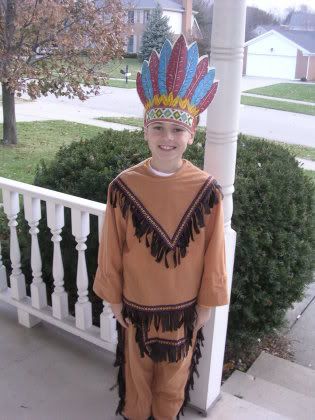
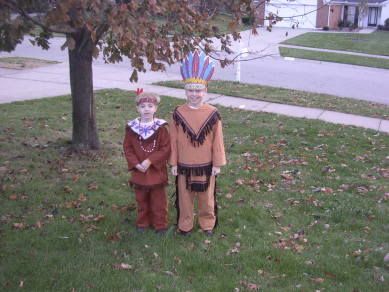
    Nicholas and Basil dressed for their Thanksgiving feast at school.


    November 24, 2005
    Thanksgiving Day


    To the Most Reverend Hierarchs, the Reverend Priests and Deacons, the Monks and Nuns, the Presidents and Members of the Parish Councils of the Greek Orthodox Communities, the Day, Afternoon, and Church Schools, the Philoptochos Sisterhoods, the Youth, the Hellenic Organizations, and the entire Greek Orthodox Family in America

    Beloved Brothers and Sisters in Christ,

    As we experience the beauty of the autumn season during these final months of the year, we arrive at our national celebration of Thanksgiving, a handsome occasion to thank God for the abundance of blessings that He bestows upon us each and every day of our lives.  For many of us, Thanksgiving affords us an important annual opportunity to be reunited with long-distance family members and friends in a much anticipated celebration of life.  More importantly, however, Thanksgiving is a sacred opportunity for us to come together to affirm our recognition that God is the source of the life and liberty that we enjoy in this great land.

    The origins of Thanksgiving in our nation’s history reflect this recognition.  The colonists who had fled from Europe to escape religious persecution in the seventeenth century had found a home in America.  The price of their liberty, however, did not come without substantial hardship or risk.  For them, uncertain living accommodations, harsh weather, and perilous travel were the norm of the day.  Yet through faith, the early settlers prevailed.  They were overcome with feelings of gratitude to God because they knew that He alone was the source of the life and liberty that they had come to enjoy.  Indeed, one can imagine the early settlers finding encouragement in the comforting words of the Psalmist, Know that the Lord He is God; it is He Who has made us and not we ourselves; we are His people, and the sheep of His pasture.  Enter into His gates with thanksgiving be thankful to Him and bless His name (Psalm 99(100): 3-4).  It was in this spirit that the first celebration of Thanksgiving was born in 1621.  

    Two centuries later our nation was engulfed in a brutal civil war.  In 1863, President Abraham Lincoln issued a Proclamation establishing a day of Thanksgiving and Praise to our beneficent Father who dwelleth in the Heavens. In his proclamation, Lincoln did not ignore the calamities of war that were present at the time.  Indeed, he appealed to the nation to pray for the healing of communities and families that had been torn apart by strife.  Yet he also focused his attention on God, noting a heightened abundance of material and natural resources in the nation that year and stating, No human counsel hath devised nor hath any mortal hand worked out these great things. They are the gracious gifts of the Most High God.
     
    This year at Thanksgiving, the times in which we live, for different reasons, are no less uncertain or no less threatening as they were in past centuries.  Yet, just as our forefathers and mothers did in the midst of considerable anxiety, we too must be mindful and grateful of the beneficence of God, Who watches over us continually with care, Who delivers us from every adversity, and Who bestows continual blessings of life and liberty upon us.  As Greek Orthodox Christians who are citizens and residents of the United States, we should reflect upon our history with the same conviction, confidence, and knowledge that God alone is the source of our every prosperity that we today enjoy.  As we come together as families and communities across America, let us express our immense gratitude to Him, our beneficent Father, and let us affirm our dedication as worshipping communities of faith and service to others, so that all may come to know the endless love and mercy of our gracious and great God.  

    It is my fervent prayer that this Day of Thanksgiving may provide each of you with an opportunity to rejoice in one another’s fellowship, to grow in your assurance of God’s abiding protection, and to remember that the wondrous works and gifts of God are continually present in our daily lives.  May God bless you and your families on this wonderful Day of Thanksgiving, and may God bless America.

    With paternal love in Christ,

    +DEMETRIOS
    Archbishop of America


    GREEK ORTHODOX ARCHDIOCESE OF AMERICA
    8-10 East 79th St. New York, NY 10021  

    Tel: (212) 570-3530 Fax: (212) 774-0215
    Web:
    www.goarch.org
    Email: communications@goarch.org


  • ~Gaming~


    I have so much I want to post and don’t know where to start! My time is really limited on the computer and I want to finish addressing some of the Orthodox questions I have received. www.orthodoxchat.com is not always loading for me. I don’t know what is up with that. I want to post some articles about the role of icons and I promise to get to that. I also want to remind everyone that Earl is on tonight “do good things and good things happen to you!”


    What I really want  everyone’s help with is advice on gaming systems. Please enlighten me!  Fr. and I are so not informed on things like this. But here is my plan. Basil is now 8 and we would like to buy him a Game boy for Christmas. There are so many choices of Game boys that I am not sure which one to buy Basil.  We would also like to buy a group present for the children of a gaming system. We have major company coming for Christmas and we finished our basement a few years ago and made a nice family room and guest bedroom and opened up the staircase taking off the door and making it more of a lower level then a basement. At the moment we have builders finishing off a bathroom for our guest room. We are so excited to have some of our friends from London coming to stay with us for Christmas. Anyway I digress. What we envision is a gaming system in the downstairs family room for all the children to enjoy.  I have pretty much decided, with the small amount of ‘research’ that I have done that a GameCube might be the best for our children’s ages. But again so many choice there too, I am overwhelmed. Do we buy it bundled with games , what accessories do we need, memory cards  etc…  Please correct me if I am wrong but it seems like the GameCube has a lot of  games for young children compared to Play Station and  xbox. I know the big news is the new Xbox 360.  One of my concerns is introducing the children to video games in the first place. Am I opening a Pandora’s box??? Right now all our boys  know are the Nintendo 64 games they play at our friend’s house and the games they play on the computer.


    So for all you well informed gamers out there can you give a girl some advice?


    Thank you in advance.

  • Many people have asked me about the role of the Mary  (the Mother of God) in Orthodox Theology and tradition here is an article that speaks to many of these questions. It is  written by a well known Orthodox convert, priest and author.  Fr. Peter Gillquist is a former Campus Crusade for Christ leader who went on an active search  to find the ancient Christian Church of the New Testament.  


    ~Facing Up to Mary~


    By Fr. Peter E. Gillquist


    Is it safe to say that no woman in history is more misunderstood by modern Christendom than the Virgin Mary? And is it also probable that in a discussion concerning Mary between two Christians, if their differences remain unresolved, most likely it will be due to differing interpretations of the biblical data? If I have heard him say it once, I have heard Billy Graham say it at least a half-dozen times over the years: We evangelical Christians do not give Mary her proper due. There is no doubt in my mind that he is correct. But his statement raises a crucial question about Mary. What is her proper due? Before we look to the Scriptures for some answers, let us acknowledge right up front a problem which makes our task much more difficult than it should be. The highly charged emotional atmosphere which surrounds this subject serves to blunt our objectivity in facing up to Mary. Therefore, those of us who were brought up to question or reject honor paid to Mary in Christian worship or art often have our minds made up in advance. That is why we have allowed our preconceptions to color our understanding even of the scriptural passages concerning her. We have not let the facts speak for themselves. As we attempt to face up to Mary honestly and openly, let us turn first to the Bible, the source book of all true Christian doctrine. We will consider what the New Testament teaches about her, and then we will turn to the Old Testament. To understand how the biblical record has been applied through the years by Christians, we will look specifically at Church history to understand both how she has been properly honored, and how excessive beliefs concerning her have crept into the picture. Lastly, we will look at how we must face up to her in light of the fullness of the Gospel of Jesus Christ.


    THE NEW TESTAMENT RECORD
    What is it, then, that the New Testament clearly teaches concerning the Virgin Mary? The Gospel of Saint Luke, the book of the beloved physician, gives us at least four crucial answers.


    1. Mary is the greatest woman who ever lived.
    Whereas our Lord Jesus Christ tells us there is no greater man to walk the earth than John the Baptist, both the Archangel Gabriel and the saintly Elizabeth confess to Mary, “Blessed are you among women” (Luke 1:28 and 42). She is the most blessed of women for several reasons, the greatest of which is that she conceived, carried, gave birth to, and nurtured the very Savior of our souls. The One who today occupies the heavenly throne of David, seated regally at the right hand of God the Father, entered the human race and became our Savior through her womb. She was sovereignly chosen by the Father to bear His only begotten Son. In that role, Mary is the first person in all history to receive and accept Christ as her Savior. You and I are called to enthrone the Lord in our hearts and lives-to follow her example in doing so. Early in Christian history she is called “the first of the redeemed”. I remember entering a church some years ago and seeing a painting or icon of Mary with open arms front and center on the wall (the apse) just behind the altar. My first impulse was to wonder why Christ alone was not featured at that particular place in the church, though He was shown in a large circle that was superimposed over Mary’s heart. When I asked why she was so prominently featured, the Christian scholar with me explained, “This is one of the greatest evangelistic icons in the entire Church. What you see is Christ living as Lord in Mary’s life, and her outstretched arms are an invitation to you and me to let Him live in our lives as He has in hers”. The power of that icon stays in my mind to this day. For she has set the pace for all of us to personally give our lives over fully to Jesus Christ. Mary is also blessed because she found favor in the sight of God. Gabriel’s words of encouragement to her were, “Rejoice, highly favored one, the Lord is with you” (Luke 1:28). Then he comforted her by saying, “Do not be afraid, Mary, for you have found favor with God” (Luke 1:30, italics mine). What does one do to become one of God’s favorites, to be favored by Him? Remember Cornelius in Acts 10? He was the first Gentile to convert to Christ, “a devout man and one who . . . gave alms generously to the people, and prayed to God always” (Acts 10:2). Two verses later he is told in a vision, “Your prayers and your alms have come up for a memorial before God”. The Lord took notice of his deeds of devotion and brought him salvation. In a similar way, Mary’s purity found favor with God, and she was chosen to bear His Son. You say, “Wait a minute! Are you suggesting human merit earns salvation?” Not at all! As commendable as it is for us to live in purity, a devout life never merits salvation. Else why would Mary be called first of the redeemed, or why would Cornelius be baptized into Christ by Saint Peter? Prayer and devotion, however, do gain God’s attention. When we seek Him with all our hearts, we do find Him! Do you want to be favored of God? Then give Him everything you have, give Him your very life. This is precisely what Mary did, and why she is to be considered the greatest woman who ever lived.


    2. Mary is our model for Christian service.
    While God certainly knew Mary desired to please Him, He did not take her service for granted. The angel explained how she would bear Christ. “The Holy Spirit will come upon you, and the power of the Highest [God the Father] will overshadow you; therefore, also, that Holy One who is to be born will be called the Son of God” (Luke 1:35). Now Mary had a decision to make. Was she willing? Hear her answer, for it is the doorway to the life of spiritual service for all of us. “Behold the maidservant of the Lord!” she said. “Let it be to me according to your word” (Luke 1:38). Even if we are totally sincere about wanting to follow God, He will never conscript us apart from our consent! This is why He is called “the God of all grace” (1 Peter 5:10). We are to choose freely to obey Him and do His will. Some thirty years later, by the way, Mary again had opportunity to exalt her Lord. She was with Jesus at a wedding in Cana of Galilee. The servants who were in charge of the celebration discovered they were out of wine. Mary had no doubt as to who could solve their problem. Referring to her Son, the Lord Jesus Christ, she advised them, “Whatever He says to you, do it” (John 2:5).


    3. Mary is the Mother of God.
    Now things get a bit more touchy for some of us. Here is one of those emotional trouble spots I mentioned earlier. Whether we like to face it or not, the Bible teaches Mary is the mother of God. First let’s look at the text, then we will discuss why this title is so important to our lives as Christians in the Church. After Christ had been conceived in her womb, Mary paid a visit to the home of relatives Zacharias and Elizabeth, soon to be parents of John the Baptist. When Mary greeted her cousin, Elizabeth called her blessed and said, “Why is this granted to me, that the mother of my Lord should come to me?” (Luke 1:43). Elizabeth knew that her Lord, the Messiah of Israel, was in the womb of Mary. The title “Mother of God” took on great importance in the fourth century, when a heretic named Nestorius-a man who held high office in the Church-claimed that the one in Mary’s womb was certainly man, but that He was not God. Orthodox Christians, with one accord, said, “Wrong!” To see Jesus Christ as something less than God in the flesh is sub-Christian. For unless the one in Mary’s womb was and is God, we are dead in our sins. To safeguard the full deity of Christ, the Church has always insisted that Mary be rightly called-as Elizabeth called herthe Mother of God. This title, of course, does not mean mother of the Holy Trinity, for the Holy Trinity has no mother. Neither does it mean she originated the Person who is God the Son. It refers instead to Mary being the Mother of the Son of God, who assumed full humanity in her womb. Just as we insist on the Virgin Birth of Christ, we also insist that for the nine months Mary carried Him in His humanity He was at every moment fully God as well. Thus we say boldly and with great insistence that Mary is the Mother of God, Theotokos, God-bearer. To say anything less is to side with those who deny His deity. When a man buys a large plot of land and turns cattle out to graze on it, he fences in his acreage. He does so to protect his cattle, to keep them from wandering off, and to discourage rustlers. Similarly, the Church sets doctrinal fences around its foundational truths. And nothing is more basic and important to us than the deity of Christ. Because Christ is God, we set a firm and non-negotiable fence around His divinity by our unmovable confession that Mary is Mother of God.


    4. We are to honor Mary and call her blessed.
    Now comes the toughest test of all. Not only is Mary the most blessed of women, our model for obedience, and the Mother of God, we are called to honor her and to bless her. How do we know? The Bible tells us so. During her three-month stay at Elizabeth’s house, Mary offered one of the most beautiful prayers of praise to the Lord in all the Scriptures. It begins, “My soul magnifies the Lord”, and thus it has become known as “The Magnificat”. In that prayer, inspired by the Holy Spirit, Mary prophesied, “henceforth all generations will call me blessed” (Luke 1:48). Essentially, all generations in Church history have done so; only the last few centuries have faltered. Our generation of American Christians is filled with those who refuse to bless her, and we must change our ways. For some Christian bodies have come to stand dogmatically against Christ and the New Testament by refusing to bless her. From the beginning of recorded Christian worship, Orthodox Christians have taken special care to venerate or honor Mary in the Liturgy. There is an ancient hymn which begins, “It is truly right to bless you, O Theotokos (Mother of God)”. She is also called in this hymn “ever-blessed and most pure”. The biblical injunction to honor Mary is followed and taken seriously. We do not, of course, worship Mary, for worship is reserved for the Trinity: Father, Son, and Holy Spirit. But she is most certainly to be honored and venerated. And because Christ is our elder brother, the firstborn of many brethren, we honor the Virgin Mary as our Mother, our Lady, as well. Just as Eve was mother of the old Adamic race, so Mary is the true Mother of the new race, the Body of Christ, the Church. Perhaps in part because we refuse to honor Mary, our generation seems to struggle with honoring anyone. For example, next time a presidential news conference comes on T.V., watch closely how most of the press corps behave! Far from merely trying to get the story, many are out for intimidation and willful dishonor. While God’s word tells us to honor the king (1 Peter 2:17) and to give preference to each other (Romans 12:10), our generation seems to delight in challenging and humiliating other people, especially those in authority. Not only are we who are Bible-believing Christians urged to give honor to whom honor is due (Romans 13:7), we are called by God in no uncertain terms to bless the Mother of our God. We cannot get around that point in Scripture.


    THE OLD TESTAMENT AND MARY
    We know that the Old Testament is more than just an inspired account of the history of mankind, or of Israel in particular. In its pages-indeed central to its message-is also the prophetic record concerning our Lord Jesus Christ. He is typified throughout. Moses is a type of Christ, in that he leads the people out of bondage into the land of promise. David typifies Christ as King of Israel. Adam was a type of Christ as head of the human race. Often overlooked, however, is the fact that the Virgin Mary is also seen in the prophetic pages of the Old Testament. Most Christians are aware that the Prophet Isaiah predicts Mary’s virgin conception of Christ when he writes: “Therefore the Lord Himself will give you a sign: Behold, the virgin shall conceive and bear a Son, and shall call His name Immanuel” (Isaiah 7:14). But there are numerous other passages which speak of Mary as well.


    EVER-VIRGIN
    From the very early years of the Church, Mary was called not only Virgin, but Ever-Virgin. She was seen as never having had a sexual union with Joseph, before or after the birth of Christ. Ezekiel 44:1, 2 is a passage often referred to by the early Fathers in this regard. It states: “Then He brought me back to the outer gate of the sanctuary which faces toward the east, but it was shut. And the LORD said to me, `This gate shall be shut; it shall not be opened, and no man shall enter by it, because the LORD God of Israel has entered by it; therefore it shall be shut.’ “In traditional interpretation of this passage, Mary is the temple and Christ is the Prince of Peace. The gate mentioned is seen as a picture of Christ’s passage through the door of Mary’s womb. You might not find that interpretation in some of today’s commentaries, but it was held by the great majority of early Church Fathers, as well as many of the Reformation leaders. At this point, however, a very valid question can be raised. If she remained a virgin, why does the Gospel of Matthew tell us that Joseph knew not his wife until Christ was born (Matthew 1:25)? From a scriptural standpoint, the presence of the phrase, “until she had brought forth her firstborn Son” does not automatically mean that Joseph must have known her afterward. This is because in both Greek and Hebrew the word until or to can have several different meanings. We find it in 2 Samuel 6:23: “Michal the daughter of Saul had no children to [until] the day of her death”. It is used again in Matthew 28:20 where the risen Christ says “Lo, I am with you always, even to [until] the end of the age”. And in Deuteronomy 34:6 we read that Moses was buried “in a valley in the land of Moab . . . but no one knows his grave to [until] this day”. Obviously the use of the word in these passages does not imply that Michal had a child after her death, that Christ will depart at the end of the age, or that Moses’ burial place was discovered the day Deuteronomy 34:6 was written. By the same token, the word until in Matthew 1:25 does not mean that Joseph and Mary began a sexual union after Christ was born. Such a teaching is found nowhere in Scripture and is contrary to the consistent voice of the entire early Church. But doesn’t the Bible also mention other brothers and sisters of Christ? Who are they and where did they come from? For one thing, they are never directly called the sons and daughters of Mary and Joseph. In several passages the Bible speaks of the children or relatives as “brothers”. Abraham and Lot are called brothers, although Lot was actually Abraham’s nephew. And Jacob and Laban are called brothers, even though Jacob was the son of Rebecca, Laban’s sister. Scripture is therefore silent concerning the nature of this relationship between Christ and these brothers and sisters. Early Fathers differed slightly in their understanding of what the terms meant. Some, such as Saint Ambrose, believed that they were children of a former marriage between Joseph and a wife who died prior to Matthew chapter 1. Others taught that they were cousins. But on one point, almost everyone is in agreement: Mary and Joseph had no sexual union whatsoever, before or after the birth of Christ. I must say in all candor that had my betrothed been the woman chosen by the Father to bear His eternal Son in the flesh, my view of her would have been utterly transformed and my honor for her infinitely heightened. Imagine being betrothed to the Mother of God. It was so with Joseph. His betrothed was ever-virgin.


    ROYALTY
    If we as the Church are called to be “not having spot or wrinkle or any such thing, but . . . holy and without blemish” (Ephesians 5:27), does it not follow that she who is the progenitor of the Lord of that Church should be of that same holy character? Not only has Mary by the mercy and power of God conquered both sin and death, the psalmist sees a glimpse of her in heaven through prophetic eyes. For in Psalm 45, Christ is King and Mary is at His side as Queen and rightly so. If God can make us “kings and priests” (Revelation 1:6) for all eternity, certainly He has the prerogative to crown her with higher honor in heaven’s royal procession. Little did John and James realize, the day they argued about which of them might occupy the seat of honor at Christ’s right hand in the Kingdom, that God the Father had already reserved that space for the marvelous woman He chose to bear His Son for our salvation. The honor is appropriate for the most blessed of all women, the one who is our very icon of holiness. Who else could be more rightly rewarded? Thus the psalmist is well within the mark when he writes of Christ, “At Your right hand stands the queen” (Psalm 45:9)!


    OTHER TRADITIONS
    There are two other beliefs concerning Mary that must be briefly mentioned and addressed. The first is her bodily assumption into heaven, the other her immaculate conception. It was widely reported in the early Church that shortly after her death, Mary’s body was assumed into heaven. In later centuries, the Roman Church ratified this belief as dogma, while the Eastern Church withheld such an official imprimatur. Most Christians agree that such a miracle is within the realm of firm biblical precedent, Enoch and Elijah being two examples. Further, there is no known record of any gravesite or relics of the Holy Virgin. The assumption of the Virgin is safely seen as an historic Christian tradition, though not recorded in the Scriptures. The Immaculate Conception of Mary is a doctrine unique to the modern Roman Church. In an effort to distance Mary (and protect Christ) from the stain of sin, the Immaculate Conception holds Mary was conceived and born without sin. The Orthodox Church firmly rejects this doctrine on the basis of both Scripture and tradition. Whatever other excesses may have cropped up in history, the Roman Church has never believed or officially taught that Mary was in any way coequal with the Trinity or was to be worshiped with the Trinity. Such allegations are sometimes set forth by critics of the Roman Church, but without basis in fact.


    THE VESPERS PRAYER
    Near the end of Vespers in the Orthodox Church, the officiant says, “O holy Mother of God, save us”. What does this mean? The Orthodox Church has taught from the very beginning that Mary is the supreme example, or prototype, of what happens to a person who fully places trust and faith in God. Everything we aspire to become in Christ, she already is. We are all to “receive” Christ (John 1:12). And as we noted previously, Mary was the first human being who did receive Christ. Out of the millions of “decisions” made for Christ, Mary’s was the first. Therefore, whatever promises the Holy Scriptures hold for us, Mary already possesses. If the sacred Scriptures declare that we are all kings (Revelation 1:6), is it so strange that the Church refers to Mary as Queen? If the Holy Bible promised that you and I shall judge angels (1 Corinthians 6:3), is it so odd that the Church should sing that Mary is “more honorable than the cherubim and more glorious beyond compare than the seraphim”? If we who are called “holy brethren” (Hebrews 3:1) are commanded to be holy as God is holy (1 Peter 1:15, 16) and are to present our bodies as a living sacrifice (Romans 12:1), is it so unthinkable that she whose holy body was the recipient of God Incarnate should be called “most holy” by the Church? If Saint Paul instructs us to “[pray] always . . . for all the saints” (Ephesians 6:18), is it so outrageous to confess with the Church that Holy Mary (along with all the saints who have passed from death to life and continually stand in the presence of Christ) intercedes before her Son on behalf of all men? Mary volitionally relinquished her will to the will of God, thus cooperating fully with the purpose of God. So the original question, “Can Mary save us?” leads to another question: “Can we save others?” Again, the Holy Scriptures speak with resounding clarity. Here are some examples: “Take heed to yourself and to the doctrine. Continue in them, for in doing this you will save both yourself and those who hear you” (1 Timothy 4:16). “Let him know that he who turns a sinner from the error of his way will save a soul from death and cover a multitude of sins” (James 5:20). “And on some have compassion, making a distinction; but others save with fear, pulling them out of the fire” (Jude 22, 23). Fire saves (1 Corinthians 3:15), prayer saves (James 5:15), angels save (Isaiah 63:9), baptism saves (1 Peter 3:21), preaching saves (1 Corinthians 1:21), the Apostle Paul saved (Romans 11:14). New life in Christ, or salvation, is both personal union with Him and an incorporation into the wholeness of the Body, the Church. Salvation is a Church affair, a Church concern, because we are all affected by it. In another biblical image, salvation is seen as a family matter-God’s family (“the whole family in heaven and earth”-Ephesians 3:15). Everybody gets into the act, so to speak. Therefore, under Christ we each have a part to play in the corporateness of His saving act. We do not save alone; Mary does not save alone. Jesus Christ is our wellspring of salvation. And He said, “Without Me you can do nothing” (John 15:5). But, “If you abide in Me, and My words abide in you, you will ask what you desire, and it shall be done for you” (John 15:7). Mary has a unique role in our salvation because she provided the physical body of Christ and thereby became the “mother” of all those who would be saved. That is why Jesus, while on the Cross, said to His mother, “Woman, behold your son!” and then said to Saint John, “Behold your mother!” (John 19:26, 27).


    TAKING ACTION
    Many Christians have been grossly misinformed in the last 150 years concerning the historical Church’s view of Mary. Therefore, I would suggest that you keep this booklet and use it to help others when the question arises. And remember also that there are things that are unique to the Virgin Mary. She was the only one who gave her flesh to the Son of God, and she is uniquely to be blessed throughout all generations (Luke 1:48). What we do about Mary is connected directly to what we do about Church. The community of Christ’s followers is called to act together. Taking action with regard to Mary is not simply personal or private; it has to do with responding as The Church. And where in Christendom has the fullness of truth concerning Mary been preserved? Even most Protestants-both liberal and conservative-know she is slighted in their circles. The answer for Protestants who take the biblical and historical evidence seriously lies neither within the Protestant Churches nor in the Roman Church, with its questionable late dogmatic additions concerning Mary. I urge you to visit and get to know the historic Orthodox Church which has maintained the biblical fidelity concerning Mary and Christian Faith in general. Within the boundaries of Orthodoxy, the faith and practice of the Church safeguard true commitment to the Lord Jesus Christ together with God the Father and God the Holy Spirit. It is there that the truths of the Bible are taught in their entirety, where the worship of God is experienced in Spirit and in truth, and where Mary and the great cloud of witnesses for Christ throughout the ages are honored and revered. The hour is at hand for all of us who love Christ and take seriously the Holy Scriptures to set our hearts and minds to giving Holy Mary her proper due in the proper Church. We do so because God has done great things for and through her (Luke 1:49). As Christians we do not live by feelings, we live by faith. Let us once for all rise above those things the devil has sown in our hearts to neutralize us against this precious woman who gave birth to our Savior. Bless her in the midst of God’s people. Follow her example in exalting Christ. Confess her as the Mother of God. Come home to the Church that has kept intact our Holy Faith. And may we help turn our generation back to giving Mary the honor and blessing which God has commanded.


    Used by permission. Copyright–Conciliar Press


    Back to Links Page


  • Maria~Angelica’s name day today!


    Feasts and Saints of the Orthodox Church

    November 21


    Nov21.jpg
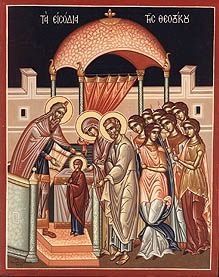
    The Entry of the Most Holy Mother of God into the Temple

    The Entry into the Temple of the Most Holy Theotokos according to Holy Tradition, this took place in the following manner. The parents of the Virgin Mary, Righteous Joachim and Anna, praying for an end to their childlessness, vowed that if a child were born to them, they would dedicate it to the service of God.

    When the Most Holy Virgin reached the age of three, the holy parents decided to fulfill their vow. They gathered together their relatives and acquaintances, and dressed the All-Pure Mary in Her finest clothes. With the singing of sacred songs and with lighted candles in their hands, virgins escorted Her to the Temple (Ps. 44/45:14-15). There the High Priest and several priests met the handmaiden of God. In the Temple, fifteen high steps led to the sanctuary, which only the priests and High Priest could enter. (Because they recited a Psalm on each step, Psalms 119/120-133/134 are called “Psalms of Ascent.”) The child Mary, so it seemed, could not make it up this stairway. But just as they placed Her on the first step, strengthened by the power of God, She quickly went up the remaining steps and ascended to the highest one. Then the High Priest, through inspiration from above, led the Most Holy Virgin into the Holy of Holies, where only the High Priest entered once a year to offer a purifying sacrifice of blood. Therefore, all those present in the Temple were astonished at this most unusual occurrence.

    Righteous Joachim and Anna, having entrusted their Child to the will of the Heavenly Father, returned home. The Most Blessed Mary remained in the quarters for virgins, near the Temple. Round about the Temple, through the testimony of Holy Scripture (Exodus 38; 1 Kings 1: 28; Lk. 2: 37), and also the historian Josephus Flavius, there were many living quarters, in which dwelt those dedicated to the service of God.

    The earthly life of the Most Holy Theotokos from Her infancy until She was taken up to Heaven is shrouded in deep mystery. Her life at the Jerusalem Temple was also a secret. “If anyone were to ask me,” said Blessed Jerome, “how the Most Holy Virgin spent the time of Her youth, I would answer, that is known to God Himself and the Archangel Gabriel, Her constant guardian.”

    But there are accounts in Church Tradition, that during the All-Pure Virgin’s stay at the Temple, She grew up in a community of pious virgins, diligently read the Holy Scripture, occupied Herself with handicrafts, prayed constantly, and grew in love for God. In remembrance of the Entry of the Most Holy Theotokos into the Jerusalem Temple, Holy Church from ancient times established a solemn Feastday. The decretals for the making of the Feast in the first centuries of Christianity are found in the traditions of Palestinian Christians, where mention is made that the holy Empress Helen built a church in honor of the Entry into the Temple of the Most Holy Theotokos.

    St. Gregory of Nyssa, in the fourth century, mentions this Feast. In the eighth century Sts. Germanus and Tarasius, Patriarchs of Constantinople, delivered sermons on the Feast of the Entry.

    The Feast of the Entry of the Most Holy Theotokos into the Temple foretells the blessing of God for the human race, the preaching of salvation, the promise of the coming of Christ.

    DISCOURSE ON THE FEAST OF THE ENTRY OF OUR MOST PURE LADY THEOTOKOS INTO THE HOLY OF HOLIES by Saint Gregory Palamas, Archbishop of Thessalonica

    If a tree is known by its fruit, and a good tree bears good fruit (Mt. 7:17; Lk. 6:44), then is not the Mother of Goodness Itself, She who bore the Eternal Beauty, incomparably more excellent than every good, whether in this world or the world above? Therefore, the coeternal and identical Image of goodness, Preeternal, transcending all being, He Who is the preexisting and good Word of the Father, moved by His unutterable love for mankind and compassion for us, put on our image, that He might reclaim for Himself our nature which had been dragged down to uttermost Hades, so as to renew this corrupted nature and raise it to the heights of Heaven. For this purpose, He had to assume a flesh that was both new and ours, that He might refashion us from out of ourselves. Now He finds a Handmaiden perfectly suited to these needs, the supplier of Her own unsullied nature, the Ever-Virgin now hymned by us, and Whose miraculous Entrance into the Temple, into the Holy of Holies, we now celebrate. God predestined Her before the ages for the salvation and reclaiming of our kind. She was chosen, not just from the crowd, but from the ranks of the chosen of all ages, renowned for piety and understanding, and for their God-pleasing words and deeds.

    In the beginning, there was one who rose up against us: the author of evil, the serpent, who dragged us into the abyss. Many reasons impelled him to rise up against us, and there are many ways by which he enslaved our nature: envy, rivalry, hatred, injustice, treachery, slyness, etc. In addition to all this, he also has within him the power of bringing death, which he himself engendered, being the first to fall away from true life.

    The author of evil was jealous of Adam, when he saw him being led from earth to Heaven, from which he was justly cast down. Filled with envy, he pounced upon Adam with a terrible ferocity, and even wished to clothe him with the garb of death. Envy is not only the begetter of hatred, but also of murder, which this truly man-hating serpent brought about in us. For he wanted to be master over the earth-born for the ruin of that which was created in the image and likeness of God. Since he was not bold enough to make a face to face attack, he resorted to cunning and deceit. This truly terrible and malicious plotter pretended to be a friend and useful adviser by assuming the physical form of a serpent, and stealthily took their position. By his God-opposing advice, he instills in man his own death-bearing power, like a venomous poison.

    If Adam had been sufficiently strong to keep the divine commandment, then he would have shown himself the vanquisher of his enemy, and withstood his deathly attack. But since he voluntarily gave in to sin, he was defeated and was made a sinner. Since he is the root of our race, he has produced us as death-bearing shoots. So, it was necessary for us, if he were to fight back against his defeat and to claim victory, to rid himself of the death-bearing venomous poison in his soul and body, and to absorb life, eternal and indestructible life.

    It was necessary for us to have a new root for our race, a new Adam, not just one Who would be sinless and invincible, but one Who also would be able to forgive sins and set free from punishment those subject to it. And not only would He have life in Himself, but also the capacity to restore to life, so that He could grant to those who cleave to Him and are related to Him by race both life and the forgiveness of their sins, restoring to life not only those who came after Him, but also those who already had died before Him. Therefore, St. Paul, that great trumpet of the Holy Spirit, exclaims, “the first man Adam was made a living soul, the last Adam was made a quickening spirit” (1 Cor. 15:45).

    Except for God, there is no one who is without sin, or life-creating, or able to remit sin. Therefore, the new Adam must be not only Man, but also God. He is at the same time life, wisdom, truth, love, and mercy, and every other good thing, so that He might renew the old Adam and restore him to life through mercy, wisdom and righteousness. These are the opposites of the things which the author of evil used to bring about our aging and death.

    As the slayer of mankind raised himself against us with envy and hatred, so the Source of life was lifted up [on the Cross] because of His immeasurable goodness and love for mankind. He intensely desired the salvation of His creature, i.e., that His creature would be restored by Himself. In contrast to this, the author of evil wanted to bring God’s creature to ruin, and thereby put mankind under his own power, and tyrannically to afflict us. And just as he achieved the conquest and the fall of mankind by means of injustice and cunning, by deceit and his trickery, so has the Liberator brought about the defeat of the author of evil, and the restoration of His own creature with truth, justice and wisdom.

    It was a deed of perfect justice that our nature, which was voluntarily enslaved and struck down, should again enter the struggle for victory and cast off its voluntary enslavement. Therefore, God deigned to receive our nature from us, hypostatically uniting with it in a marvellous way. But it was impossible to unite that Most High Nature, Whose purity is incomprehensible for human reason, to a sinful nature before it had been purified. Therefore, for the conception and birth of the Bestower of purity, a perfectly spotless and Most Pure Virgin was required.

    Today we celebrate the memory of those things that contributed, if only once, to the Incarnation. He Who is God by nature, the Co-unoriginate and Coeternal Word and Son of the Transcendent Father, becomes the Son of Man, the Son of the Ever-Virgin. “Jesus Christ the same yesterday and today, and forever” (Heb. 13:8), immutable in His divinity and blameless in His humanity, He alone, as the Prophet Isaiah prophesied, “practiced no iniquity, nor deceit with His lips” (Is. 53: 9). He alone was not brought forth in iniquity, nor was He conceived in sin, in contrast to what the Prophet David says concerning himself and every other man (Ps. 50/51: 5). Even in what He assumes, He is perfectly pure and has no need to be cleansed Himself. But for our sake, He accepted purification, suffering, death and resurrection, that He might transmit them to us.

    God is born of the spotless and Holy Virgin, or better to say, of the Most Pure and All-Holy Virgin. She is above every fleshly defilement, and even above every impure thought. Her conceiving resulted not from fleshly lust, but by the overshadowing of the Most Holy Spirit. Such desire being utterly alien to Her, it is through prayer and spiritual readiness that She declared to the angel: “Behold the handmaiden of the Lord; be it unto Me according to thy word” (Lk. 1:38), and that She conceived and gave birth. So, in order to render the Virgin worthy of this sublime purpose, God marked this ever-virgin Daughter now praised by us, from before the ages, and from eternity, choosing Her from out of His elect.

    Turn your attention then, to where this choice began. From the sons of Adam God chose the wondrous Seth, who showed himself a living heaven through his becoming behavior, and through the beauty of his virtues. That is why he was chosen, and from whom the Virgin would blossom as the divinely fitting chariot of God. She was needed to give birth and to summon the earth-born to heavenly sonship. For this reason also all the lineage of Seth were called “sons of God,” because from this lineage a son of man would be born the Son of God. The name Seth signifies a rising or resurrection, or more specifically, it signifies the Lord, Who promises and gives immortal life to all who believe in Him.

    And how precisely exact is this parallel! Seth was born of Eve, as she herself said, in place of Abel, whom Cain killed through jealousy (Gen. 4:25); and Christ, the Son of the Virgin, was born for us in place of Adam, whom the author of evil also killed through jealousy. But Seth did not resurrect Abel, since he was only a foretype of the resurrection. But our Lord Jesus Christ resurrected Adam, since He is the very Life and the Resurrection of the earth-born, for whose sake the descendents of Seth are granted divine adoption through hope, and are called the children of God. It was because of this hope that they were called sons of God, as is evident from the one who was first called so, the successor in the choice.This was Enos, the son of Seth, who as Moses wrote, first hoped to call on the Name of the Lord (Gen. 4:26).

    In this manner, the choice of the future Mother of God, beginning with the very sons of Adam and proceeding through all the generations of time, through the Providence of God, passes to the Prophet-king David and the successors of his kingdom and lineage. When the chosen time had come, then from the house and posterity of David, Joachim and Anna are chosen by God. Though they were childless, they were by their virtuous life and good disposition the finest of all those descended from the line of David. And when in prayer they besought God to deliver them from their childlessness, and promised to dedicate their child to God from its infancy. By God Himself, the Mother of God was proclaimed and given to them as a child, so that from such virtuous parents the all-virtuous child would be raised. So in this manner, chastity joined with prayer came to fruition by producing the Mother of virginity, giving birth in the flesh to Him Who was born of God the Father before the ages.

    Now, when Righteous Joachim and Anna saw that they had been granted their wish, and that the divine promise to them was realized in fact, then they on their part, as true lovers of God, hastened to fulfill their vow given to God as soon as the child had been weaned from milk. They have now led this truly sanctified child of God, now the Mother of God, this Virgin into the Temple of God. And She, being filled with Divine gifts even at such a tender age, … She, rather than others, determined what was being done over Her. In Her manner She showed that She was not so much presented into the Temple, but that She Herself entered into the service of God of her own accord, as if she had wings, striving towards this sacred and divine love. She considered it desirable and fitting that she should enter into the Temple and dwell in the Holy of Holies.

    Therefore, the High Priest, seeing that this child, more than anyone else, had divine grace within Her, wished to set Her within the Holy of Holies. He convinced everyone present to welcome this, since God had advanced it and approved it. Through His angel, God assisted the Virgin and sent Her mystical food, with which She was strengthened in nature, while in body She was brought to maturity and was made purer and more exalted than the angels, having the Heavenly spirits as servants. She was led into the Holy of Holies not just once, but was accepted by God to dwell there with Him during Her youth, so that through Her, the Heavenly Abodes might be opened and given for an eternal habitation to those who believe in Her miraculous birthgiving.

    So it is, and this is why She, from the beginning of time, was chosen from among the chosen. She Who is manifest as the Holy of Holies, Who has a body even purer than the spirits purified by virtue, is capable of receiving … the Hypostatic Word of the Unoriginate Father. Today the Ever-Virgin Mary, like a Treasure of God, is stored in the Holy of Holies, so that in due time, (as it later came to pass) She would serve for the enrichment of, and an ornament for, all the world. Therefore, Christ God also glorifies His Mother, both before birth, and also after birth.

    We who understand the salvation begun for our sake through the Most Holy Virgin, give Her thanks and praise according to our ability. And truly, if the grateful woman (of whom the Gospel tells us), after hearing the saving words of the Lord, blessed and thanked His Mother, raising her voice above the din of the crowd and saying to Christ, “Blessed is the womb that bore Thee, and the paps Thou hast sucked” (Lk. 11:27), then we who have the words of eternal life written out for us, and not only the words, but also the miracles and the Passion, and the raising of our nature from death, and its ascent from earth to Heaven, and the promise of immortal life and unfailing salvation, then how shall we not unceasingly hymn and bless the Mother of the Author of our Salvation and the Giver of Life, celebrating Her conception and birth, and now Her Entry into the Holy of Holies?

    Now, brethren, let us remove ourselves from earthly to celestial things. Let us change our path from the flesh to the spirit. Let us change our desire from temporal things to those that endure. Let us scorn fleshly delights, which serve as allurements for the soul and soon pass away. Let us desire spiritual gifts, which remain undiminished. Let us turn our reason and our attention from earthly concerns and raise them to the inaccessable places of Heaven, to the Holy of Holies, where the Mother of God now resides.

    Therefore, in such manner our songs and prayers to Her will gain entry, and thus through her mediation, we shall be heirs of the everlasting blessings to come, through the grace and love for mankind of Him Who was born of Her for our sake, our Lord Jesus Christ, to Whom be glory, honor and worship, together with His Unoriginate Father and His Coeternal and Life-Creating Spirit, now and ever and unto ages of ages. Amen.

  • ~What Orthodox Christians Believe~


    I have recently had a few  e-mails asking me to explain what Orthodox Christians believe. With the new baby I don’t have a lot of time anymore  to answer people in a more personal way. Below I have posted a good explanation from one of my favorites links. http://www.protomartyr.org/links.html  There  are also several very good articles on the above link that answer some common questions that Protestant Christians have about Orthodoxy and the Orthodox Church. Also anyone can visit and post questions to a message board I help moderate www.orthodoxchat.com  There are a lot of very well informed , humble and pious Christians that post on the  boards that would welcome any questions and friendly conversations. In the next couple days I will post more articles to answer specific questions. Please let me know if this article was helpful in answering your questions. Also if there are any more  questions you might have please feel free to e-mail me and I will try to post some helpful articles.


    With love in Christ,


    Pres. Lisa


    GOD THE FATHER is the fountainhead of the Holy Trinity. The Scriptures reveal that the one God is Three Persons–Father, Son and Holy Spirit–eternally sharing the one divine nature. From the Father the Son is begotten before all ages and all time (Psalm 2:7; 2 Corinthians 11:31). It is also from the Father that the Holy Spirit eternally proceeds (John 15:26). Through Jesus Christ, and in the Holy Spirit, we come to know the Father (Matthew 11:27). God the Father created all things through the Son, in the Holy Spirit (Genesis 1; 2; John 1:3; Job 33:4), and we are called to worship Him (John 4:23). The Father loves us and sent His Son to give us everlasting life (John 3:16).


    JESUS CHRIST is the Second Person of the Trinity, eternally born of the Father. He became a man, and thus He is at once fully God and fully man. His coming to earth was foretold in the Old Testament by the Prophets. Because Jesus Christ is at the heart of Christianity, the Orthodox Church has given more attention to knowing Him than to anything or anyone else. In reciting the Nicene Creed, Orthodox Christians regularly affirm the historic faith concerning Jesus as they say, “I believe…in one Lord Jesus Christ, begotten of the Father before all ages, Light of Light, Very God of Very God, begotten, not made, of one essence with the Father, by whom all things were made, who for us men and for our salvation came down from heaven, and was incarnate of the Holy Spirit and the Virgin Mary, and was made man; and was crucified also for us under Pontius Pilate, and suffered and was buried; and the third day He rose again from the dead, according to the Scriptures; and ascended into heaven, and sits at the right hand of the Father; and He shall come again with glory to judge the living and the dead, whose Kingdom shall have no end.”


    THE HOLY SPIRIT is one of the Persons of the Trinity and is one in essence with the Father. Orthodox Christians repeatedly confess, “And I believe in the Holy Spirit, the Lord and Giver of life, who proceeds from the Father, who together with the Father and the Son is worshipped and glorified. . .” He is called the “Promise of the Father” (Acts 1:4), given by Christ as a gift to the Church, to empower the Church for service to God (Acts 1:8), to place God’s love in our hearts (Romans 5:5), and to impart spiritual gifts (1 Corinthians 12:7-13) and virtues (Galatians 5:22, 23) for Christian life and witness. Orthodox Christians believe the biblical promise that the Holy Spirit is given in chrismation (anointing) at baptism (Acts 2:38). We are to grow in our experience of the Holy Spirit for the rest of our lives.


    INCARNATION refers to Jesus Christ coming “in the flesh.” The eternal Son of God the Father assumed to Himself a complete human nature from the Virgin Mary. He was (and is) one divine Person, fully possessing from God the Father the entirety of the divine nature, and in His coming in the flesh fully possessing a human nature from Mary. By His Incarnation, the Son forever possesses two natures in His one Person. The Son of God, limitless in His divine nature, voluntarily and willingly accepted limitation in His humanity, in which He experienced hunger, thirst, fatigue–and ultimately, death. The Incarnation is indispensable to Christianity–there is no Christianity without it. The Scriptures record, “Every spirit that does not confess that Jesus Christ has come in the flesh is not of God” (1 John 4:3). By His Incarnation, the Son of God redeemed human nature, a redemption made accessible to all who are joined to Him in His glorified humanity.


    SIN literally means “to miss the mark.” As Saint Paul writes, “All have sinned and fall short of the glory of God” (Romans 3:23). We sin when we pervert what God has given us as good, falling short of His purposes for us. Our sins separate us from God (Isaiah 59:1,2), leaving us spiritually dead (Ephesians 2:1). To save us, the Son of God assumed our humanity, and being without sin, “He condemned sin in the flesh” (Romans 8:3). In His mercy, God forgives our sins when we confess them and turn from them, giving us strength to overcome sin in our lives. “If we confess our sins, He is faithful and just to forgive us our sins and to cleanse us from all unrighteousness” (1 John 1:9).


    SALVATION is the divine gift through which men and women are delivered from sin and death, united to Christ, and brought into His eternal Kingdom. Those who heard Peter’s sermon on the Day of Pentecost asked what they must do to be saved. He answered, “Repent, and let every one of you be baptized in the name of Jesus Christ for the remission of sins; and you shall receive the gift of the Holy Spirit” (Acts 2:38). Salvation begins with these three “steps”: 1) repent, 2) be baptized, and 3) receive the gift of the Holy Spirit. To repent means to change our mind about how we have been, turning from our sin and committing ourselves to Christ. To be baptized means to be born again by being joined into union with Christ. And to receive the gift of the Holy Spirit means to receive the Spirit who empowers us to enter a new life in Christ, be nurtured in the Church, and be conformed to God’s image.


    BAPTISM is the way in which a person is actually united to Christ. The experience of salvation is initiated in the waters of baptism. The Apostle Paul teaches in Romans 6:1-6 that in baptism we experience Christ’s death and Resurrection. In it our sins are truly forgiven and we are energized by our union with Christ to live a holy life.
    Nowadays, some consider baptism to be only an “outward sign” of belief in Christ. This innovation has no historical or biblical precedent. Others reduce it to a mere perfunctory obedience to Christ’s command (cf. Matthew 28:19, 20). Still others, ignoring the Bible completely, reject baptism as a vital factor in salvation. Orthodoxy maintains that these contemporary innovations rob sincere people of the important assurance that baptism provides-namely that they have been united to Christ and are part of His Church.


    NEW BIRTH is receiving new life and is the way we gain entrance into God’s Kingdom and His Church. Jesus said, “Unless one is born of water and the Spirit, he cannot enter the kingdom of God” (John 3:5). From the beginning, the Church has taught that the “water” is the baptismal water and the “Spirit” is the Holy Spirit. The New Birth occurs in baptism, where we die with Christ, are buried with Him, and are raised with Him in the newness of His Resurrection, being joined into union with Him in His glorified humanity (Romans 6:3,4). The historically late idea that being “born again” is a religious experience disassociated from baptism has no biblical basis whatsoever.


    JUSTIFICATION is a word used in the Scriptures to mean that in Christ we are forgiven and actually made righteous in our living. Justification is not a once-for-all, instantaneous pronouncement guaranteeing eternal salvation, no matter how wickedly a person may live from that point on. Neither is it merely a legal declaration that an unrighteous person is righteous. Rather, justification is a living, dynamic, day-to-day reality for the one who follows Christ. The Christian actively pursues a righteous life in the grace and power of God granted to all who are believing Him.


    SANCTIFICATION is being set apart for God. It involves us in the process of being cleansed and made holy by Christ in the Holy Spirit. We are called to be saints and to grow into the likeness of God. Having been given the gift of the Holy Spirit, we actively participate in sanctification. We cooperate with God, we work together with Him, that we may know Him, becoming by grace what He is by nature.


    THE BIBLE is the divinely inspired Word of God (2 Timothy 3:16), and is a crucial part of God’s self-revelation to the human race. The Old Testament tells the history of that revelation from Creation through the Age of the Prophets. The New Testament records the birth and life of Jesus as well as the writings of His Apostles. It also includes some of the history of the early Church and especially sets forth the Church’s apostolic doctrine. Though these writings were read in the churches from the time they first appeared, the earliest listing of all the New Testament books exactly as we know them today is found in the Thirty-third Canon of a local council held at Carthage in A.D. 318 and in a fragment of Saint Athanasius of Alexandria’s Festal Letter for the year 367. Both sources list all of the books of the New Testament without exception. A local council, probably held at Rome under Saint Damasus in 382, set forth a complete list of the canonical books of both the Old and New Testaments. The Scriptures are at the very heart of Orthodox worship and devotion.


    WORSHIP is the act of ascribing praise, glory and thanksgiving to God: the Father, the Son and the Holy Spirit. All humanity is called to worship God. Worship is more than being in the “great out-of-doors” or listening to a sermon or singing a hymn. God can be known in His creation, but that doesn’t constitute worship. And as helpful as sermons may be, they can never offer a proper substitute for worship. Most prominent in Orthodox worship is the corporate praise, thanksgiving and glory given to God by the Church. This worship consummates in intimate communion with God at His Holy Table.
    As is said in the Liturgy, “To You is due all glory, honor and worship, to the Father, and to the Son, and to the Holy Spirit, now and ever and unto ages of ages. Amen.” In that worship we touch and experience His eternal Kingdom, the age to come, and join in adoration with the heavenly hosts. We experience the glory of the fulfillment of all things in Christ as truly all in all.


    EUCHARIST means “thanksgiving” and early became a synonym for Holy Communion. The Eucharist is the center of worship in the Orthodox Church. Because Jesus said of the bread and wine at the Last Supper, “This is my body,” “This… is… my blood,” and “Do this in remembrance of Me” (Luke 22:19, 20), His followers believe-and do–nothing less. In the Eucharist, we partake mystically of Christ’s Body and Blood, which impart His life and strength to us. The celebration of the Eucharist was a regular part of the Church’s life from its beginning. Early Christians began calling the Eucharist “the medicine of immortality” because they recognized the great grace of God that was received in it.


    LITURGY is a term used to describe the shape or form of the Church’s corporate worship of God. The word “liturgy” derives from a Greek word which means “the common work.” All the biblical references to worship in heaven involve liturgy.
    In the Old Testament, God ordered a liturgy, or specific pattern of worship. We find it described in detail in the Books of Exodus and Leviticus. In the New Testament we find the Church carrying over the worship of Old Testament Israel as expressed in both the synagogue and the temple, adjusting them in keeping with their fulfillment in Christ. The Orthodox Liturgy, which developed over many centuries, still maintains that ancient shape of worship. The main elements in the Liturgy include hymns, the reading and proclamation of the Gospel, prayers, and the Eucharist itself. For Orthodox Christians, the expressions “the Liturgy” or “the Divine Liturgy” refer to the eucharistic rite instituted by Christ Himself at the Last Supper.


    COMMUNION OF SAINTS. When Christians depart this life, they remain a vital part of the Church, the Body of Christ. They are alive in the Lord and “registered in heaven” (Hebrews 12:23). They worship God (Revelation 4:10) and inhabit His heavenly dwelling places (John 14:2). In the Eucharist we come “to the city of the living God” and join in communion with the saints in our worship of God (Hebrews 12:22). They are that great “cloud of witnesses” which surrounds us, and we seek to imitate them in running “the race that is set before us” (Hebrews 12:1). Rejecting or ignoring the communion of saints is a denial that those who have died in Christ are still part of His Holy Church.


    CONFESSION is the open admission of known sins before God and man. It means literally “to agree with” God concerning our sins. Saint James admonishes us to confess our sins to God before one another (James 5:16). We are also exhorted to confess our sins directly to God (1 John 1:9). The Orthodox Church has always followed the New Testament practices of confession before a priest, as well as private confession to the Lord. Confession is one of the most significant means of repenting and of receiving assurance that even our worst sins are truly forgiven. It is also one of our most powerful aids for forsaking and overcoming those sins.


    DISCIPLINE may become necessary to maintain purity and holiness in the Church and to encourage repentance in those who have not responded to the admonition of brothers and sisters in Christ, and of the Church, to forsake their sins. Church discipline often centers around exclusion from receiving Communion (ex-communication). The New Testament records how Saint Paul ordered the discipline of ex-communication for an unrepentant man involved in sexual relations with his father’s wife (1 Corinthians 5:1-5). The Apostle John warned that we are not to receive into our homes those who willfully reject the truth of Christ (2 John 9, 10). Throughout her history, the Orthodox Church has exercised discipline with compassion when it is needed, always to help bring a needed change of heart and to aid God’s people to live pure and holy lives, never as a punishment.


    MARY is called Theotokos, meaning “God-bearer” or “the Mother of God,” because she bore the Son of God in her womb and from her He took His humanity. Elizabeth, the mother of John the Baptist, recognized this reality when she called Mary, “the mother of my Lord” (Luke 1:43). Mary said of herself, “All generations will call me blessed” (Luke 1:48). So we, in our generation, call her blessed. Mary lived a chaste and holy life, and we honor her highly as the model of holiness, the first of the redeemed, the Mother of the new humanity in her Son. It is bewildering to Orthodox Christians that many professing Christians who claim to believe the Bible never call Mary blessed nor honor her who bore and raised God the Son in His human flesh.


    PRAYER TO THE SAINTS is encouraged by the Orthodox Church. Why? Because physical death is not a defeat for a Christian. It is a glorious passage into heaven. The Christians does not cease to be a part of the Church at death. God forbid! Nor is he set aside, idle until the Day of Judgment.
    The True Church is composed of all who are in Christ–in heaven and on earth. It is not limited in membership to those presently alive. Those in heaven with Christ are alive, in communion with God, worshiping God, doing their part in the Body of Christ. They actively pray to God for all those in the Church–and perhaps, indeed, for the whole world. So we pray to the saints who have departed this life, seeking their prayers, even as we ask Christian friends on earth to pray for us.


    APOSTOLIC SUCCESSION has been a watershed issue since the second century, not as a mere dogma, but as crucial to the preservation of the Faith. Certain false teachers came on the scene at that time insisting they were authoritative representatives of the Christian Church. Claiming authority from God by appealing to special revelations, some were even inventing lineages of teachers supposedly going back to Christ or the Apostles. In response, the early Church insisted there was an authoritative apostolic deposit passed down from generation to generation. They detailed that actual lineage, showing how its clergy were ordained by those chosen by the successors of the Apostles chosen by Christ Himself.
    Apostolic succession is an indispensable factor in preserving unity in the Church. Those in that succession are accountable to it, and are responsible to ensure that all teaching and practice in the Church is in keeping with her apostolic foundations. Mere personal conviction that one’s teaching is correct can never be considered adequate proof of accuracy. Today, critics of apostolic succession are those who stand outside that historic succession and seek an identity with the early Church only. The burgeoning number of denominations in the world can be accounted for in large measure because of a rejection of apostolic succession.


    COUNCILS OF THE CHURCH. A monumental conflict (recorded in Acts 15) arose in the early Church over legalism, the keeping of Jewish laws by the Christians, as means of salvation “Now the apostles and elders came together [in council] to consider this matter” (Acts 15:6). This council, held in Jerusalem, set the pattern for the subsequent calling of councils to settle problems. There have been hundreds of such councils–local and regional-over the centuries of the history of the Church, and seven councils specifically designated “Ecumenical,” that is, considered to apply to the whole Church. The Orthodox Church looks particularly to these Ecumenical Councils for authoritative teaching in regard to the faith and practice of the Church, aware that God has spoken through them.


    CREED comes from the Latin credo, “I believe.” From the earliest days of the Church, creeds have been living confessions of what Christians believe and not simply formal, academic, Church pronouncements. Such confessions of faith appear as early as the New Testament, where, for example, Saint Paul quotes a creed to remind Timothy, “God was manifested in the flesh. . .” (1 Timothy 3:16). The creeds were approved by Church councils, usually to give a concise statement of the truth in the face of the invasion of heresy.
    The most important creed in Christendom is the Nicene Creed, the product of two Ecumenical Councils in the fourth century. Fashion in the midst of a life-and-death controversy, it contains the essence of New Testament teaching about the Holy Trinity, guarding that life-giving truth against those who would change the very nature of God and reduce Jesus Christ to a created being rather than God in the flesh. The creeds give us a sure interpretation of the Scriptures against those who would distort them to support their own religious schemes. Called the “Symbol of Faith” and confessed in many of the services of the Church, the Nicene Creed constantly reminds the Orthodox Christian of what her personally believes, keeping his faith on track.


    ICONS are images of Christ, of His angels, of His saints, and of events such as the Birth of Christ, His Transfiguration, His death on the Cross, and His Resurrection. Icons actually participate in and thus reveal the reality they express. In the image we see and experience the Prototype. An icon of Christ, for example, reveals something of Christ Himself to us. Icons are windows to heaven, not only revealing the glory of God, but becoming to the worshiper a passage into the Kingdom of God. The history of the use of icons goes back to the early Church-Tradition tells us Luke the Evangelist was the first iconographer. Orthodox Christians do not worship icons, but they honor them greatly because of their participation in heaven’s reality.


    SPIRITUAL GIFTS. When the young Church was getting underway, God poured out His Holy Spirit upon the Apostles and their followers, giving them spiritual gifts to build up the Church and serve each other. Among the specific gifts of the Spirit mentioned in the New Testament are: apostleship, prophecy, evangelism, pastoring, teaching, healing, helps, administrations, knowledge, wisdom, tongues, interpretation of tongues. These and other spiritual gifts are recognized in the Orthodox Church. The need for them varies with the times. The gifts of the Spirit are most in evidence in the liturgical and sacramental life of the Church.


    SECOND COMING. With the current speculation in some corners of Christendom surrounding the Second Coming of Christ and how it may come to pass, it is comforting to know the beliefs of the Orthodox Church are basic. Orthodox Christians confess with conviction that Jesus Christ “will come again to judge the living and the dead,” and that “His Kingdom will have no end.” Orthodox preaching does not attempt to predict God’s prophetic schedule, but to encourage Christian people to have their lives in order that they might have confidence before Him when He comes (1 John 2:28).


    HEAVEN is the place of God’s throne beyond time and space. It is the abode of God’s angels, as well as of the saints who have passed from this life. We pray, “Our Father, who are in heaven. . .” Though Christians live in this world, they belong to the Kingdom of heaven, and that Kingdom is their true home. But heaven is not only for the future. Neither is it some distant place billions of light years away in a nebulous “great beyond.” For the Orthodox, heaven is part of Christian life and worship. The very architecture of an Orthodox church building is designed so that the building itself participates in the reality of heaven. Saint Paul teaches we are raised up with Christ in heavenly places (Ephesians 2:6), “fellow citizens with the saint and members of the household of God” (Ephesians 2:19). At the end of the age, a new heaven and a new earth will be revealed (Revelation 21:1).


    HELL, unpopular as it is among modern people, is real. The Orthodox Church understands hell as a place of eternal torment for those who willfully reject the grace of God. Our Lord once said, “If your hand causes you to sin, cut it off. It is better for you to enter into life maimed, rather than having two hands, to go to hell, into the fire that shall never be quenched–where ‘Their worm does not die, and the fire is not quenched’ ” (Mark 9:43, 44). He challenged the religious hypocrites with the question: “How can you escape the condemnation of hell?” (Matthew 23:33). His answer is, “God did not send His Son into the world to condemn the world, but that the world through Him might be saved” (John 3:17). There is a Day of Judgment coming, and there is a place of punishment for those who have hardened their hearts against God. It does make a difference how we live this life. Those who of their own free will reject the grace and mercy of God must forever bear the consequences of that choice.


    CREATION. Orthodox Christians confess God as Creator of heaven and earth (Genesis 1:1, the Nicene Creed). Creation did not just happen into existence. God made it all. “TB faith we understand that the worlds were framed by the word of God. . .” (Hebrews 11:3). Orthodox Christians do not believe the Bible to be a scientific textbook on creation, as some mistakenly maintain, but rather God’s revelation of Himself and His salvation. Also, helpful as they may be, we do not view scientific textbooks as God’s revelation. They may contain both known facts and speculative theory. They are not infallible. Orthodox Christians refuse to build an unnecessary and artificial wall between science and the Christian Faith. Rather, they understand honest scientific investigation as a potential encouragement to faith, for all truth is from God.


    ABORTION is the termination of a pregnancy by taking the life of the baby before it comes to full term. The Scriptures teach, “For You formed my inward parts; You covered me in my mother’s womb” (Psalm 139:13). When an unborn child is aborted, a human being is killed. There are at least two effective alternatives to abortion: 1) prevention of conception by abstinence or contraceptives, or 2) giving up an unwanted baby for adoption. For the Christian, all children, born or unborn, are precious in God’s sight and a gift from Him. Even in the rare case in which a choice must be made between the life of the child and the life of the mother, decision-making must be based upon the recognition that the lives of two human persons are at stake.


    CULTS. The world “cult” has several meanings. The usage to which we refer designates a group of people who focus on a religious doctrine which deviates from the Tradition of the historic Church as revealed by Jesus Christ, established by His Apostles, and guarded by the seven Ecumenical Councils of the Church. A cult usually originates around a particular personality who proclaims a heresy as truth. The error itself assures the separation of the group from historic Christianity. Many cults claim the Bible as their basis, but they alter the historic interpretation of Scripture to persist in their own idea. Cults may do some things that are good (e.g., care for the poor, emphasize the family) and thus at least initially appear to be part of true Christianity to casual observers. Saint Paul’s counsel on cults is, “From such withdraw yourself’ (1 Timothy 6:5). The danger of a cult is that it removes those in it from the life of Christ and the Church, where the blessings and grace of God are found. All cults die; the Church lives on.


    MARRIAGE in the Orthodox Church is forever. It is not reduced to an exchange of vows or the establishment of a legal contract between the bride and groom. On the contrary, it is God joining a man and a woman into “one flesh” in a sense similar to the Church being joined to Christ (Ephesians 5:31, 32). The success of marriage cannot depend on mutual human promises, but on the promises and blessing of God. In the Orthodox marriage ceremony, the bride and groom offer their lives to Christ and to each other–literally as crowned martyrs.


    DIVORCE. While extending love and mercy to divorcees, the Orthodox Church is grieved by the tragedy and the pain divorce causes. Though marriage is understood as a sacrament, and thus accomplished by the grace of God and is permanent, the Church does not deal with divorce legalistically, but with compassion. After appropriate pastoral counsel, divorce may be allowed when avenues for reconciliation have been exhausted. If there is a remarriage, the service for a second marriage includes prayers of repentance over the earlier divorce, asking God’s forgiveness and protection for the new union. A third marriage is generally not granted. Clergy who are divorced may be removed, at least for a time, from active ministry, and are not permitted to remarry if they are to remain in the ministry.


    PREMARITAL SEX. The Orthodox Christian Faith firmly holds to the biblical teaching that sexual intercourse is reserved for marriage. Sex is a gift of God to be fully enjoyed and experienced only within marriage. The marriage bed is to be kept “undefiled” (Hebrews 13:4), and men and women are called to remain celibate outside of marriage. Our sexuality, like many other things about us human beings, affects our relationship with God, ourselves, and others. It may be employed as a means of glorifying God and fulfilling His image in us, or it may be perverted and abused as an instrument of sin, causing great damage to us and others. Saint Paul writes, “Do you not know that your body is the temple of the Holy Spirit who is in you, whom you have from God, and you are not your own? For you were bought at a price; therefore glorify God in your body. . .” (1 Corinthians 6:19, 20).


    Used by permission. Copyright–Conciliar Press
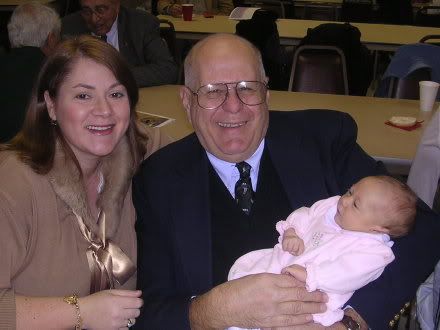
  • ~  Maria~Angelica’s first family outing ~


    Today November 19th Maria~Angelica is a month old!


    Last Sunday we enjoyed  our godson  Peter’s 5th birthday party.


    Picture128.jpg


    Petey and Nouna (godmother)


    Picture120.jpg


    Connie and me with our two little baby girls.


    Picture118.jpg


    Chloe (9 months old) checking out her new best friend!


    Picture121.jpg


     Peter waiting patiently to blow out his candles. 


    Picture129.jpg


    Peter enjoying his present. I think it’s a hit!


    Picture126.jpg


    Basil the proud biggest brother and BEST helper.


    Picture127.jpg


    Picture134.jpg


    I just love how Maria~Angelica fits in so perfectly with our family. She is such a blessing, such a joy! Such a miracle!


    shhhbabyssleeping.jpg


    Shhh the baby is sleeping.


    Picture137.jpg


    Enjoying a little Skyline (it is a Cincy thing) before the Christmas fast begun.


    Picture144.jpg


    My cousin Jenny sent us this sweet little blanket she made for the baby.


    Picture143.jpg


    A good time was had by all!


  • My Name is Earl is on tonight! If you haven’t seen it yet it is hillarious; it makes me laugh out loud.  The writing is great and it is just one of the shows with heart. 


    9pm EST NBC

  • Nativity Fast


    Dear Fathers, Parish Faithful & Friends in Christ,


    This Monday morning finds us – in addition to life’s many complications – on the eve of the Nativity Fast that begins tomorrow, November 15.  Are we aware and are we prepared?  Nothing like a fast before Christmas to engage in some genuine “counter-cultural” activity!  If taken seriously, and acted upon with vigilance, it is almost subversive of the reigning social order.   Perhaps for the simple reason that the Nativity Fast places Christ at the center of our attention, rather than the multiple substitutes that have accumulated over the years.  That has always been subversive throughout the centuries - even within the Christian cultures of the past.  But from our limited perspective, it seems even more so today. 


    Cliches, repeated over time, lose their effectiveness due to their obviousness.  And yet, after abandoning them for that very reason, the truth they declare may become forgotten, ignored, or too easily “tolerated.”   At the risk of losing your attention by beginning with a time-honored Christian cliche, I would like to offer, by way of reminder, a blunt restatement of the obvious: Christmas has been trivialized and commercialized.  It has been  overwhelmed in the process.  In short, Christmas has become virtually unrecognizable here in North America.  And yet, ironically, this is the only reason that it has been tolerated in our secular society to the extent to which it is to the present!  Without this downward transformation engineered by the twin processes mentioned above, Christmas would long ago been confined to the Churches as an overtly religious celebration.  All the ingredients for this unavoidable result have long been intact:  pluralism, secularism, capitalism, consumerism, etc. 


    Briefly, then, I believe that that is the socio-cultural context in which we begin our own preparation for the Nativity in the flesh of our Lord God and Savior Jesus Christ – to give the Feast its full liturgical title.  We are certainly going to participate in the above, but we may need to access to what degree and at what cost.  Can we brace ourselves to become “counter-cultural” by being Christ-centered in some meaningful and recognizable form?   I do not mean gritting our teeth and then launching a veritable reign of terror in our households as part of a determined campaign to “put Christ back into Christmas.”   That would be one more “abortive attempt at holiness,” as Metropolitan Anthony Bloom once wrote.  But I do mean gladly embracing the Church’s approach and direction as the “right one” meant  either to build upon an existing relationship with our Our Lord, or to restore a lost one.  According to the teaching of Christ, conveyed to us through the Church, that is only possible through prayer, fasting and almsgiving.   A Church-centered preparation means postponing a good deal of the celebrating that the culture at large offers before the Feast arrives.  There exists, then, an unavoidable tension between Church and “culture” that demands some choices on our part.  Those choices, however, could determine the experiential difference between a quietly-developed joy that is more lasting in duration; and a rather seasonally-generated “happiness” that is basically the equivalent of a “good mood.”


    I began by writing of an approach both serious and vigilant concerning the Nativity Fast that begins tomorrow.  In addition to setting some realistic – and yet challenging – goals about fasting, prayer and almsgiving, we could also keep the following in mind:


    Increasing your church attendance through the forty days; or, perhaps, even return to church;


    The reading of the Holy Scripures and a good book or selection of serious theological writings about the Incarnation of Christ;


    Reading a “classic” that will unfailingly raise moral and ethical issues of a meaningful nature;


    Viewing of thoughtful films on a family basis – again, there are many wonderful “classics” available;


    Simplifying our “natural” reaction of rampant consumerism in the purchasing of gifts;


    Restoring any broken relationships that need forgiveness either received or given.


    Wherever Christ is present, the “impossible” becomes “possible.”  At what other time of the year is that so available than when we prepare to celebrate His advent in the flesh?


    Fr. Steven C. Kostoff
    Christ the Savior/Holy Spirit Orthodox Church
    http://www.christthesavioroca.org